


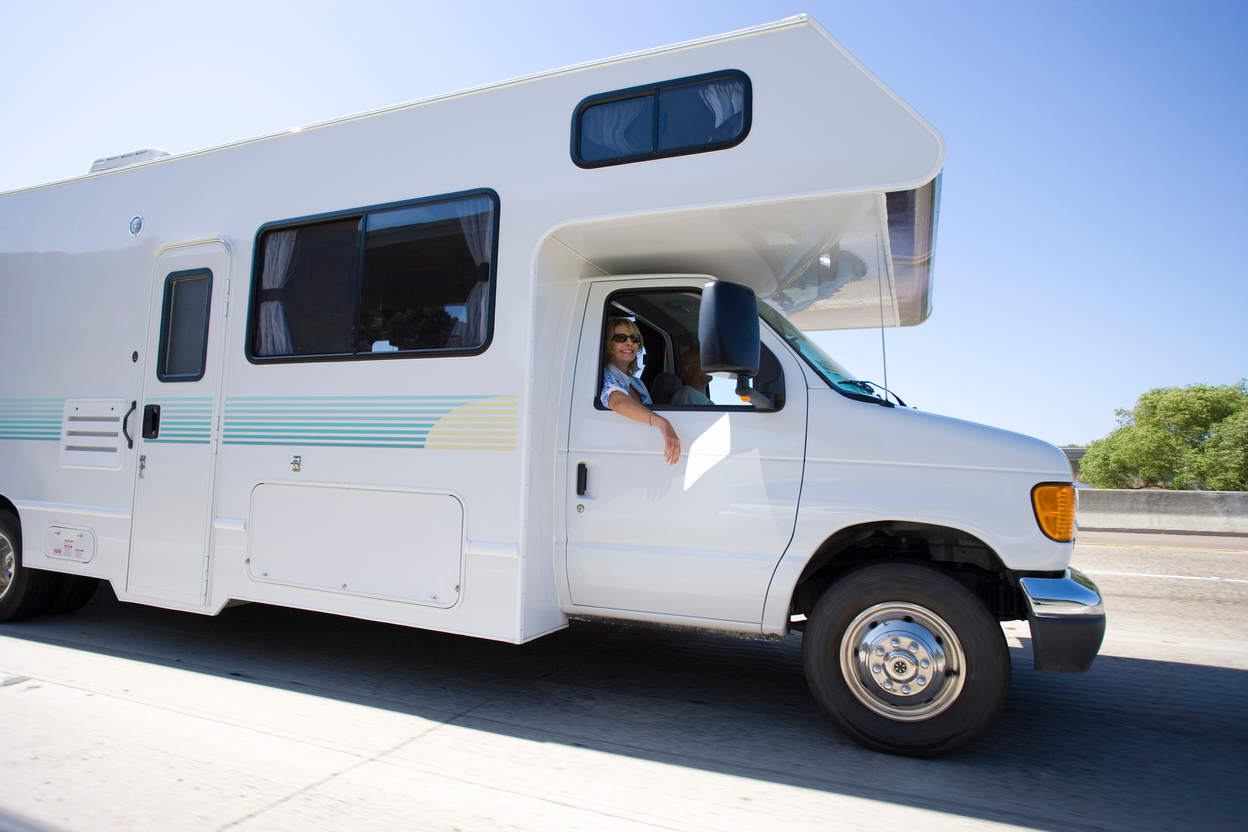
Planning your first RV holiday can feel like learning a new language.
You start searching RV and camper rentals, and suddenly you are reading about Class B vans, Class C motorhomes, travel trailers, dry weight, tow ratings, 30-amp hookups, sewer hoses, kilometres, deposits, and insurance.
Then somebody asks what size hitch receiver you have.
You were only trying to go camping.
The good news is that a first RV trip in British Columbia does not need to be complicated.
Choose a rig that suits your driving experience, understand the rental agreement before leaving, pick an easy destination, and give yourself time to learn how everything works.
For travellers starting around Vancouver and the Lower Mainland, the Sunshine Coast, BC is particularly appealing. You can take the ferry from Horseshoe Bay to Langdale, drive north through coastal communities, and use one serviced campground as a base rather than moving every night.
At Halfmoon Bay RV Resort, first-time renters can stay on a serviced RV pad while remaining within practical reach of Sechelt. The resort welcomes Class A, B, and C RVs and says rigs up to 40 feet can generally be accommodated. It also provides potable water, sewer service and a range of electrical connections depending on the pad.
Before you book the campsite, however, you need the right rental.
Here is how to choose it without discovering halfway to the ferry that your holiday home and your vehicle are not actually on speaking terms.
Your first choice is between a motorised RV and a towable trailer.
Common rental options include:
For many beginners, the easiest choice is a smaller Class B or Class C motorhome.
You drive the RV itself, so there is no trailer hitch to manage.
Go RVing Canada specifically suggests that brand-new RV drivers consider a Class B or smaller Class C because they can be easier to manoeuvre.
A travel trailer rental works differently.
You bring or rent a suitable tow vehicle, hitch the trailer behind it, and then unhitch after reaching the campground.
That gives you one big advantage once you arrive:
Your car or truck is free for sightseeing.
Go RVing Canada notes that travel trailers can be detached at the campground, allowing travellers to use their tow vehicle for shopping and exploring.
That can work very well on the Sunshine Coast.
Set up the trailer once, then use the tow vehicle for Sechelt, local beaches, lakes, trails, and dinner runs.
Bigger is not always better on your first RV trip.
A 35-foot motorhome may offer more living space, but it also means:
If two people are travelling for a long weekend, you probably do not need an RV designed to sleep eight.
Choose enough space to be comfortable without renting far more vehicle than you need.
For a couple, a campervan or compact motorhome can be much easier.
For a family, a Class C or suitable travel trailer may provide useful sleeping space without moving into full coach-bus territory.
Remember that you will be driving it before you are relaxing in it.
This is one of the most important rules in the entire guide.
Do not book a trailer simply because the rental listing says your type of SUV or truck can probably tow it.
Check your specific vehicle.
You need to know:
The maximum trailer weight is not the only number that matters.
Your passengers, luggage, bicycles, coolers, and other gear also affect vehicle loading.
Go RVing Canada advises matching the loaded trailer weight to the tow vehicle’s capacity, not simply looking at the empty trailer weight.
If you are unsure, speak with the rental company and your vehicle manufacturer or dealer before booking.
A rental holiday should not begin with:
“She’s probably fine.”
A travel trailer rental requires more than a ball attached somewhere behind the vehicle.
The correct setup can depend on the trailer and tow vehicle.
Ask whether you need:
Go RVing Canada recommends using the correct hitch and ensuring that trailer brakes, turn signals, and tail lights operate properly with the tow vehicle.
Some rental companies provide the required hitch equipment.
Others expect you to arrive with a properly equipped vehicle.
Find out before pickup day.
Trying to solve hitch compatibility in the rental car park with everyone already packed is a strong start to a very long morning.
A larger travel trailer may have its own braking system.
Your tow vehicle may therefore need a compatible brake controller.
Ask the rental company:
Do not guess.
Braking behaviour changes significantly when a trailer is attached.
Give yourself more stopping room than you would in a normal car.
Insurance deserves more attention than most first-time renters give it.
Do not simply hear “insurance included” and move on.
Ask:
Go RVing Canada’s rental checklist says most rentals come with insurance but recommends checking whether additional insurance is required.
ICBC also offers rental vehicle coverage in certain situations, and its current Autoplan guide lists motorhomes and trailers among vehicle types that can be covered by its Rental Vehicle Policy, subject to policy limits and conditions. That does not mean your own policy automatically covers a specific rental, so confirm coverage directly before relying on it.
The safest sentence is:
“Please show me exactly what I am covered for.”
Many RV and camper rentals require a credit-card deposit.
Before booking, ask:
Go RVing Canada notes that rental companies commonly require a booking deposit and a valid credit card.
Photograph the RV at pickup.
Take clear pictures of:
Do another walk-around when returning it.
It takes five minutes and can prevent arguments later.
Some rentals include unlimited distance.
Others include a set number of kilometres and charge extra after that.
Ask:
Go RVing Canada’s rental checklist recommends checking included mileage and any minimum or maximum rental conditions.
For a Sunshine Coast trip from Vancouver, your road mileage may be relatively modest.
That makes the destination attractive for a first rental because you can spend more time camping and less time trying to cover half of Western Canada by Tuesday.
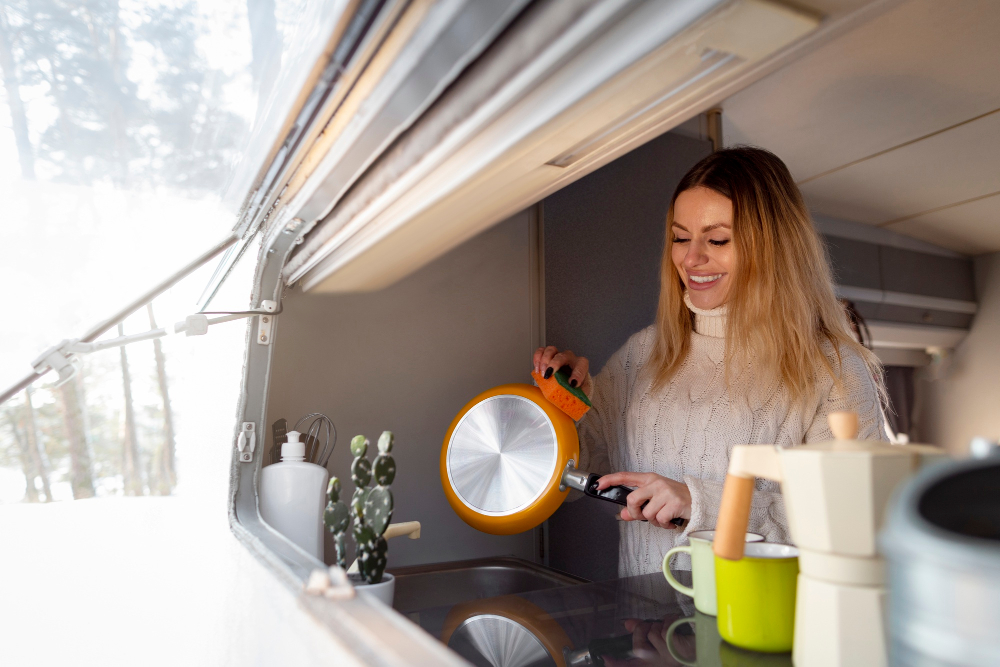
Do not rush the handover.
Ask the rental representative to show you:
Record short videos on your phone if the rental company permits it.
A five-second clip showing how the water heater starts may become surprisingly important at 9:30 that evening.
Also ask what warning lights are normal.
There are few things more exciting on your first evening than a mysterious red light labelled with an abbreviation you have never seen.
If you have never driven a motorhome or towed a trailer, do not make your first difficult manoeuvre the Horseshoe Bay ferry terminal.
Find a safe, open area and practise.
Work on:
Go RVing Canada recommends practising large-RV manoeuvres in an open area and remembering that RVs require wider turns and more stopping distance than passenger cars.
If reversing a travel trailer feels completely backwards at first, that is because it more or less is.
Go slowly.
Use a spotter.
There is no prize for reversing quickly.
First-time renters often focus on length and forget height.
Write the RV’s actual height somewhere visible near the driver’s seat.
Remember to include rooftop equipment where applicable.
Height matters around:
A campervan may fit almost anywhere.
A larger Class C or Class A may not.
Your rental company should be able to provide the vehicle dimensions.
Ask for them.
For a motorhome, know its bumper-to-bumper length.
For a trailer, know the total combination length.
That includes the tow vehicle and trailer.
This matters when:
At Halfmoon Bay RV Resort, the FAQ says Classes A, B, and C are welcome and that RVs up to 40 feet can generally be accommodated.
Still, contact the resort with your exact rental dimensions.
Do not turn up with a large rig and announce that the website said “up to 40 feet” as though every pad is identical.
This order can save trouble.
Before committing to a particular RV, make sure you can find a campsite that suits it.
Confirm:
A travel trailer rental is much easier when you already know where it will fit.
It also prevents paying for a beautiful large rental only to discover that your chosen campground has one remaining site designed for something roughly the size of a wheelbarrow.
Rental RVs may use different electrical connections.
Common RV setups include 30-amp and 50-amp service.
Ask the rental company:
Then confirm the campsite electrical service.
Halfmoon Bay RV Resort lists electrical options ranging from 30 and 50 amps to larger services depending on the pad.
For a first-time renter, tell the resort exactly what electrical connection your rental requires so you can be matched with an appropriate site.
Do not assume the RV arrives fully stocked.
Rental packages vary.
Some include:
Others charge extra.
Go RVing Canada notes that many rental companies offer convenience or housekeeping packages with kitchen supplies, bedding, towels, and other essentials.
Ask for an inventory before packing.
Otherwise you may arrive with six frying pans and no pillow.
Once you know what the rental company supplies, keep the rest simple.
A useful first-trip packing list includes:
If towing, also confirm that you have:
Many of these should come with the trailer.
“Should” is why we ask.
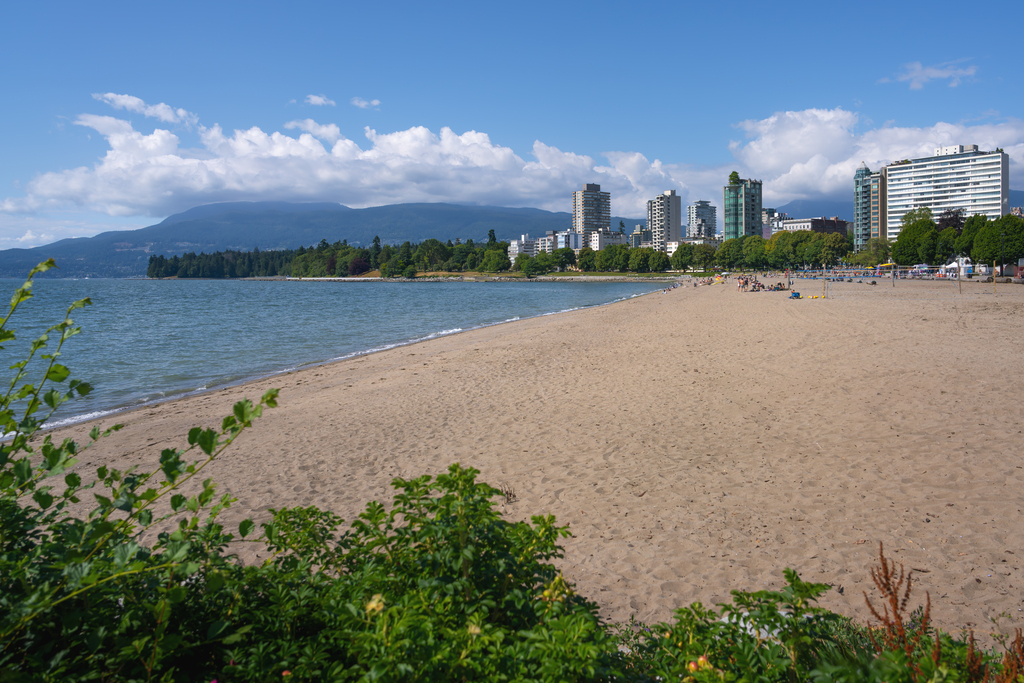
For Vancouver and Lower Mainland travellers, the Sunshine Coast offers an appealing first RV destination.
You get a proper road-trip feeling without needing to drive for eight or ten hours.
The trip begins with the Horseshoe Bay to Langdale ferry.
BC Ferries lists the crossing at around 40 minutes, and its sailing information separates vehicle space for standard-height vehicles from mixed-deck space that accommodates taller vehicles such as RVs.
That means first-time renters should know the vehicle’s:
Check the current BC Ferries booking information before travel rather than relying on old screenshots or somebody’s trip from three summers ago.
For a first-time RV renter, the ferry can actually make the journey feel easier.
You drive to Horseshoe Bay.
Board.
Then the driving stops for a while.
Forty minutes later, you are on the Sunshine Coast.
It creates a natural break between city traffic and the rest of the trip.
Keep an easy-access bag with:
Do not bury everything you need in an exterior storage compartment.
After leaving Langdale, Halfmoon Bay RV Resort gives renters a serviced base rather than a basic campsite.
For a first trip, that can remove several complications.
The resort provides:
It has more than 80 RV pads and welcomes Class A, B, and C motorhomes.
The important benefit for a beginner is not simply the amenities.
It is being able to set up once.
You can connect the RV, leave it parked, and explore the Sunshine Coast in your tow vehicle or rental car where appropriate.
This is important at Halfmoon Bay RV Resort.
The resort’s FAQ says its showers and bathrooms are for emergency use, and having a working bathroom, shower, and kitchen inside the RV is a condition of staying at the resort.
When choosing RV and camper rentals, make sure your unit is self-contained.
For Halfmoon Bay, that means confirming the rental has a functioning:
A tiny camper without bathroom facilities may be perfect for another campground.
It may not suit this particular stay.
A travel trailer rental can work particularly well on the Sunshine Coast if you are confident towing it.
Once you arrive:
That makes local exploration much easier.
You do not need to drive your accommodation to the grocery store every time somebody remembers milk.
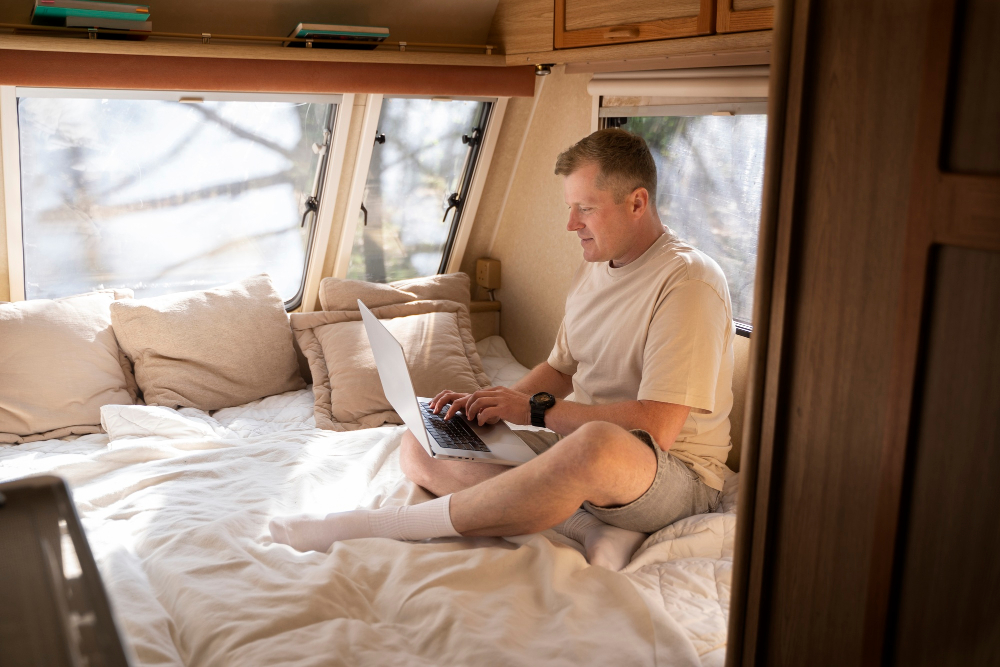
Do not arrive and immediately schedule three attractions.
Your first RV setup will take longer than you expect.
That is normal.
Plan the first evening around:
Save the big exploring for the following morning.
The first evening is successful when the RV is connected, everybody is fed, and nobody has accidentally drained the fresh-water tank onto their shoes.
More beds and more space sound great until you have to manoeuvre the thing.
Choose what you genuinely need.
Dry weight is not your real travel weight.
Food, water, propane, equipment, and luggage add weight.
Ask for exclusions and deductibles in writing.
Watch the whole demonstration.
Even the sewer part.
Especially the sewer part.
Your first backing exercise is easier when you can see.
Aim for daylight.
Know your RV length, height, slides, and electrical connection.
Every item adds weight and clutter.
BC has shops.
You are not crossing Antarctica.
Before the trip, confirm:
Then take a screenshot of the important bookings.
Phone signal and perfect timing do not always travel together.
Yes.
Renting is one of the easiest ways to try RV travel without buying a rig.
For a first trip, choose a manageable vehicle, take the rental orientation seriously, and book a serviced campground where setup is straightforward.
Usually, a campervan or smaller motorhome is easier if you have never towed before.
You only have one vehicle to drive and park.
A travel trailer gives you the advantage of leaving the accommodation at the campground and using the tow vehicle separately.
You need a tow vehicle suitable for the loaded trailer weight and compatible towing equipment.
Depending on the trailer, that can include the correct hitch, electrical connector, safety chains, brake controller, and sway or weight-distribution equipment.
Confirm everything with the rental provider before pickup.
Rental arrangements vary.
Many rental providers include some insurance, but limits, deductibles, exclusions, and optional coverage differ. Go RVing Canada recommends confirming whether additional insurance is required.
Always check the actual rental contract and your own insurer’s advice.
RV traffic uses BC Ferries, but you should enter the correct dimensions and follow the current booking and check-in requirements for your sailing.
The Horseshoe Bay–Langdale route has mixed-deck vehicle capacity for taller vehicles including RVs.
Confirm that your rental agreement permits ferry travel too.
The resort says Class A, B, and C RVs are welcome and that rigs up to 40 feet can generally be accommodated.
Contact the resort with your exact rental dimensions because pad size and availability vary.
Yes.
Its FAQ lists potable water, sewer and electrical services, with electrical options including 30, 50, 100, and 200 amps depending on the pad.
Yes.
The resort says it is pet-friendly and has two off-leash pet parks.
Check both the campground’s pet rules and the rental company’s rules before bringing an animal.
Yes.
The resort says a working bathroom, shower, and kitchen inside the RV are conditions of staying, with resort bathrooms and showers reserved for emergency use.
Your first experience with RV and camper rentals should be about discovering whether you enjoy the lifestyle.
Not spending three days worrying about towing maths.
The best way to make that happen is to keep the trip simple.
Choose a rig that fits your experience.
Confirm the insurance.
If you are booking a travel trailer rental, check the tow rating and hitch before paying the deposit.
Learn the RV systems during pickup.
Know the vehicle dimensions.
Book an appropriate campsite.
Then give yourself an easy destination.
For Vancouver-area travellers, the Sunshine Coast provides enough distance to feel like a proper holiday without requiring a huge first road trip.
And at Halfmoon Bay RV Resort, you can use a serviced RV site as your base rather than packing everything up every morning.
View current RV pad options:
Halfmoon Bay RV Resort properties
Read common resort questions:
See the resort before your trip:
Halfmoon Bay RV Resort gallery
Ask about your rental RV size and available sites:
Contact Halfmoon Bay RV Resort
Your first RV trip does not need to be perfect.
You just need the right rig, the right site, and enough time to figure out where the water pump switch is.
The rest gets much easier after that.
 See map of resort