


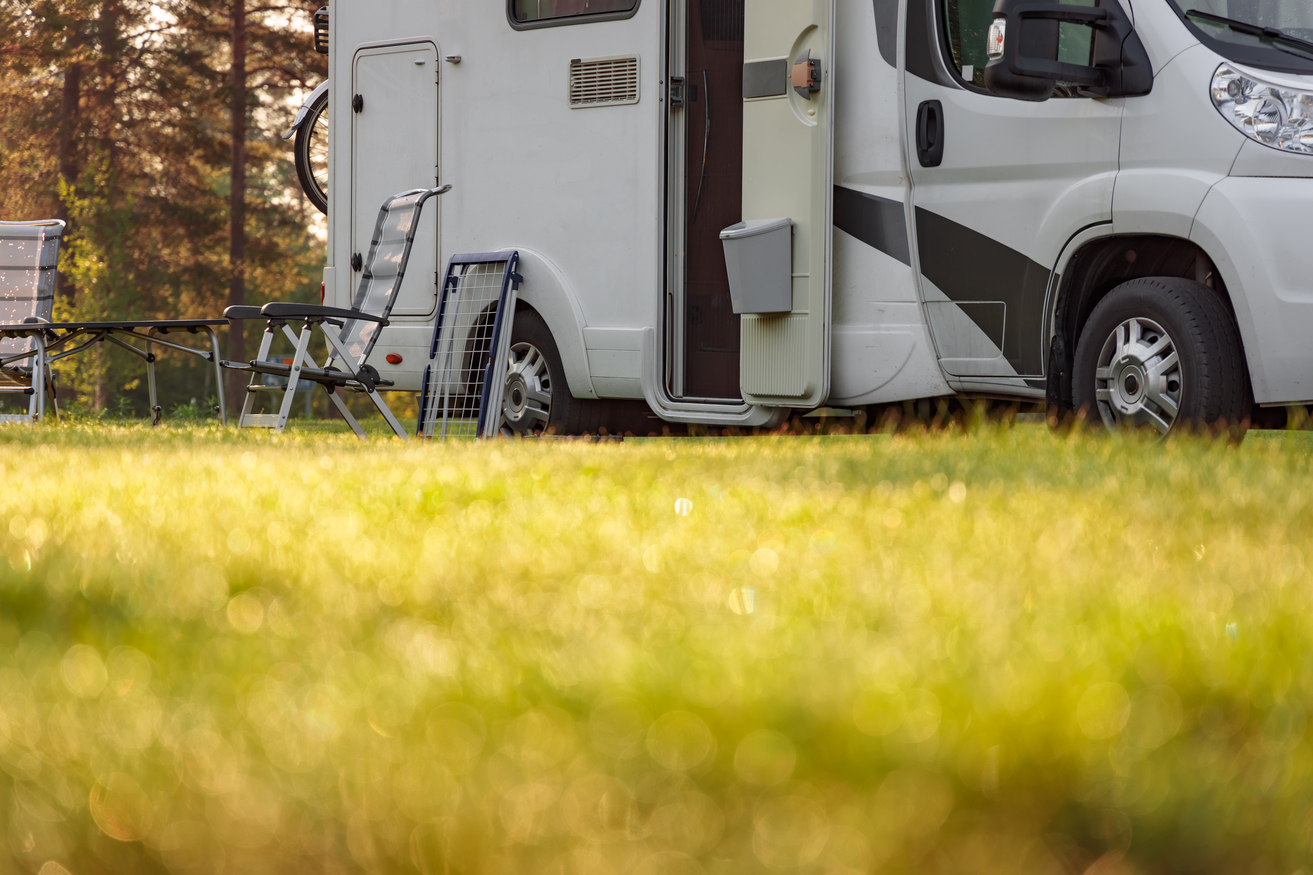
Retirement does not have to mean maintaining a large house, mowing a lawn every Saturday, and wondering why one room has not been used since Christmas.
For some Canadians, retirement is a chance to simplify.
That can mean selling or leaving a high-maintenance home, keeping the things that genuinely matter, and moving into a comfortable fifth wheel, motorhome, or suitable tiny home on wheels in a quieter part of British Columbia.
For people considering retiring in an RV in BC, the Sunshine Coast has an obvious appeal.
You still have access to shops, healthcare, restaurants, community services, and Vancouver when needed.
But daily life can feel very different from the Lower Mainland.
At Halfmoon Bay RV Resort, long-term residents live on a 20-acre forested property in Halfmoon Bay, around 20 minutes from Sechelt. The resort describes itself as a year-round, fully serviced RV and THOW community with about 80 spacious RV lots.
That combination makes it worth considering for retirees and semi-retirees who want to downsize without feeling cut off from everyday services.
This guide walks through the transition step by step.
Not just which RV to buy.
The whole thing.
Downsizing is usually about more than square footage.
People often want less responsibility.
A detached house may come with:
A condo removes some of those chores, but it can replace them with strata fees, building rules, elevators, shared hallways, and city life.
An RV or fifth wheel creates another option.
Your home is smaller.
There is less to clean.
You can organise life around the space you actually use.
And when the RV is staying on a long-term serviced pad, you do not need to pack up and drive somewhere new every three days.
For many people searching year round RV parks BC for retirees, that stable-home-base part matters more than travelling.
They are not trying to spend retirement constantly moving.
They want to stop moving.
Mention RV retirement and somebody will imagine a tiny camper with one folding chair and a tin of beans.
That does not have to be the reality.
A modern fifth wheel or larger motorhome can include:
A stationary fifth wheel can feel much closer to a compact apartment than a weekend camping trailer.
A suitable THOW can feel even more residential.
The important part is choosing the home around the way you actually plan to live.
Not around the number of people the brochure claims it can sleep.
You may technically be able to sleep eight people in some fifth wheels.
Whether eight adults remain friends afterwards is another matter.

Do this before shopping for an RV.
Ask yourself:
These answers affect everything that follows.
Someone who plans to travel for three months every summer needs a different setup from someone who wants a fifth wheel to remain in Halfmoon Bay year-round.
Weekend camping hides a lot of annoyances.
Full-time living reveals all of them.
Before choosing a fifth wheel or motorhome, spend time thinking about daily routines.
Can you:
For retirees, also consider how the rig will work several years from now.
High steps that feel fine at 62 may be less appealing later.
A bathroom that requires sideways gymnastics is probably not going to improve with age.
Each has advantages.
A fifth wheel can be a strong option for stationary retirement living because it often provides:
If it will stay mostly in one place, you may care less about towing convenience and more about the interior.
A motorhome works well if you still want to travel.
The trade-off is that part of the purchase price and maintenance budget goes towards the engine and drivetrain.
If the motorhome remains stationary for most of the year, ask whether you really need to own a house and an engine in the same box.
A tiny home on wheels can offer a more residential feel.
Halfmoon Bay RV Resort publicly promotes year-round living for suitable RVs and THOWs. However, a specific THOW still needs management approval based on its construction, dimensions, services, access, documentation, and the available site.
If you are considering a park model or another unusual unit, confirm acceptance before buying it.
Do not buy first and find the site later.
That order can become expensive.
The secret to comfortable small-space living is not clever storage.
It is owning less stuff.
Start early.
Sort everything into:
Be particularly careful with the storage category.
A storage locker can easily become a monthly payment for keeping objects you have not used in five years.
Before storing something, ask:
Would I buy this item again for the cost of three years of storage?
That question has a way of making old furniture less sentimental.
Downsizing does not mean throwing away everything you enjoy.
Keep items you will actually use.
For example:
Your new home should still feel like yours.
Minimalism is useful.
Living in a white box containing one mug and a houseplant is optional.
This is one of the most important parts of retiring in an RV in BC.
A campground being open in February does not necessarily mean it works well for full-time winter living.
Some seasonal parks reduce services outside summer.
Water may be shut off.
Washrooms may close.
Sewer facilities can change.
Halfmoon Bay RV Resort states that it operates year-round and offers fully serviced RV living. Its current FAQ confirms year-round operation for long stays as well as seasonal use.
When comparing seasonal RV parks for seniors, ask:
The answers matter much more than a campground’s summer photos.
Long-term comfort starts outside the RV.
Confirm:
Halfmoon Bay RV Resort says it can accommodate a range of RV types and generally handles RVs up to about 40 feet, but site availability and suitability still need to be confirmed for each rig.
Send management the real dimensions.
Do not say:
“It’s roughly 38 feet.”
Your tape measure has no reason to lie.
A retirement location should work on an ordinary Tuesday.
Not only during a sunny August weekend.
Halfmoon Bay RV Resort currently advertises or provides access to services including:
The precise services and charges can depend on the pad and arrangement, so confirm what is included before committing.
For retirees, these small practical details matter.
Mail matters.
Laundry matters.
Being able to receive a replacement part without turning it into a treasure hunt matters.
That is what makes a site feel like a home base rather than a campground.
Healthcare access deserves proper planning when choosing a retirement location.
Halfmoon Bay is quieter than Vancouver, but Sechelt is about 20 minutes from the resort and serves as the main service centre for this part of the Sunshine Coast.
The District of Sechelt says the community has a range of healthcare services, including hospital care, medical clinics, public health services, social services, and long-term care facilities.
Sechelt | shíshálh Hospital is a 63-bed Vancouver Coastal Health facility serving communities including Halfmoon Bay. Its emergency department operates 24 hours a day, seven days a week.
Hospital services listed by Vancouver Coastal Health include emergency care, critical care, laboratory services, CT, mammography, echocardiography, endoscopy and several surgical services.
Sechelt also has a Vancouver Coastal Health community health unit.
That does not mean every doctor, specialist, or appointment will always be available locally.
Before moving, check your own needs.
Ask:
For general BC healthcare navigation, HealthLink BC is available by calling 8-1-1.

Retirement should not require a two-hour expedition every time you run out of milk.
Sechelt offers multiple grocery and food-shopping options, according to Sunshine Coast Tourism, which identifies Sechelt as one of the Sunshine Coast communities with several grocery choices.
Downtown Sechelt is also a main shopping area, with Cowrie Street, Trail Bay Mall and other services clustered around the town centre.
That makes it practical to combine errands.
A typical town trip might cover:
Then you return to the quieter setting in Halfmoon Bay.
That balance is one of the advantages of coastal downsizing.
You are outside the city.
You are not outside civilisation.
For most long-term residents in Halfmoon Bay, having a car is useful.
Even if your RV is a motorhome, you may prefer to keep it stationary once established.
A smaller vehicle makes everyday trips easier.
You can use it for:
This is particularly useful with a fifth wheel.
Once the trailer is set up, your tow vehicle remains available.
You do not have to dismantle your home because you forgot coffee.
RV living can reduce housing overhead.
But do not assume the monthly pad fee is your entire housing budget.
Include:
A paid-off fifth wheel can create a very different retirement budget from a newly financed luxury motorhome.
The less debt attached to the rig, the stronger the potential monthly economics usually become.
Ask Halfmoon Bay RV Resort for current pricing based on your:
The resort’s FAQ says these factors can affect the rate.
An RV is a home.
And homes occasionally decide they would like money.
For long-term living, maintain a repair reserve for:
Do not wait for something to fail before deciding where the money will come from.
A monthly maintenance reserve makes retirement budgeting much calmer.
The Sunshine Coast has milder winters than many inland parts of BC.
The challenge is often moisture rather than extreme cold.
Long-term winter RV residents may need:
Halfmoon Bay’s own year-round guidance highlights damp winter conditions, heating and moisture control as important parts of all-season RV living.
Do not judge the RV only by how comfortable it feels in July.
Imagine January.
If the bed is against a cold wall, the cupboards trap damp air, and the bathroom has weak ventilation, you will notice.
This is one area retirees should think about earlier than they think they need to.
Look at:
A fifth wheel often has internal stairs because the bedroom sits above the hitch area.
That can be perfectly comfortable now.
Consider whether it still suits your longer-term plan.
If you want to add steps, handrails, skirting, a deck or another exterior feature at a long-term site, get written resort approval first.
Do not assume modifications are automatically permitted.
Your RV needs to function as a home.
Halfmoon Bay’s FAQ says residents are expected to have a working bathroom, shower and kitchen in their RV; resort bathroom and shower facilities are intended for emergency use rather than normal day-to-day resident use.
For retirees choosing a rig, this makes the bathroom especially important.
Stand in the shower.
Sit on the toilet.
Open the door.
Try getting dressed.
This is not glamorous research.
It is excellent research.
Retirement can become isolating when people move away from established neighbourhoods.
That makes community worth thinking about.
Halfmoon Bay RV Resort describes its RV and THOW community as close-knit and supportive, with residents from different backgrounds.
A long-term RV community can create casual social contact through:
You do not need to become best friends with everybody in the park.
But recognising your neighbours and having people around can make a big difference compared with living anonymously in a large city building.
Community does not mean you need a social calendar every day.
A good retirement setup gives you both.
You can chat with neighbours when you feel like it.
Then close the RV door and enjoy your own space.
For many downsizers, that balance is appealing.
There is community nearby without maintaining a large property or hosting a neighbourhood barbecue for 30 people.
Unless you want to.
In which case, somebody else is bringing the potato salad.
Pets are a major part of many retirement plans.
Halfmoon Bay RV Resort is pet-friendly and currently has two off-leash pet parks.
That can be particularly useful for long-term dog owners.
Instead of driving somewhere for every exercise break, residents have an onsite option.
When choosing an RV, consider the pet too.
Ask:
Downsizing works better when every resident approves.
Including the furry one.
Retirement involves paperwork even if you move somewhere surrounded by cedar trees.
Before relocating, update:
Halfmoon Bay RV Resort advertises Canada Post and package support, which can make longer stays more practical.
Ask management how mail should be addressed before changing anything.
Long-term RV occupancy can involve different legal arrangements depending on the park and circumstances.
Do not assume every long-term RV stay automatically falls under the same tenancy law as an apartment.
Before committing, understand:
For a THOW or unusual home type, the legal classification and site arrangement can be even more important. Halfmoon Bay’s own THOW guidance notes that a long-term agreement could take different legal forms depending on the real arrangement.
If the legal status matters to your retirement planning, get independent advice.

If possible, do not sell everything on Friday and move into an RV on Saturday.
Test the lifestyle first.
Spend time in an RV.
Cook real meals.
Spend rainy days inside.
Try the bed.
Use the shower.
Sit at the table for a few hours.
Take the dog.
Live normally.
A weekend proves you enjoy camping.
Several weeks tell you much more about whether you enjoy RV living.
That distinction matters.
These two search terms often describe very different goals.
A seasonal park can work well if you:
You may not need full winter utilities.
A true year-round arrangement makes more sense if the RV will be your main home base.
You need to ask more questions about:
Halfmoon Bay operates all year, making it more relevant to retirees looking for a steady Sunshine Coast base rather than summer-only camping.
You are retiring.
There is no need to win moving day.
People can live in RVs long term in suitable locations, but the rules depend on the property, land use and type of agreement.
Do not assume an RV can be used as a permanent dwelling on any piece of private land.
Choose a location approved for the intended use and understand the written agreement before moving.
Yes. Its current FAQ says the resort operates throughout the year.
No.
The resort describes a community made up of people from different backgrounds and is not advertised as a seniors-only park.
That can appeal to retirees who want a mixed community rather than an age-restricted development.
Yes, there are seasonal RV parks across BC, and some parks or developments may cater specifically to older adults.
However, seasonal operation is different from year-round living.
Check operating dates, winter services and age restrictions directly with each park.
Prioritise:
The best retirement park is the one that still works on a wet Wednesday in January.
Halfmoon Bay RV Resort says Sechelt is around 20 minutes away by road. Sechelt | shíshálh Hospital serves Halfmoon Bay and operates a 24/7 emergency department.
Yes. Sunshine Coast Tourism lists Sechelt among the Coast’s communities with multiple grocery-shopping options, and downtown Sechelt is a major local shopping area.
It can be.
Fifth wheels often provide spacious interiors and good storage, making them appealing for stationary living.
Pay close attention to stairs, bathroom access, heating, storage and the ability to enter and exit comfortably.
The resort publicly promotes suitable THOW living, but an individual unit still needs approval based on site compatibility, construction, documentation and current availability.
An RV resort is not an assisted-living or residential-care facility.
If your care or accessibility needs change, you may need a different housing arrangement.
That is worth including in a longer-term retirement plan.
Retirement downsizing is not about seeing how little space you can survive in.
It is about deciding how much home you genuinely want to maintain.
For some people, that will always be a house.
For others, a condo makes sense.
And for people interested in retiring in an RV in BC, a serviced fifth wheel, motorhome or approved THOW can create a smaller, simpler home base in a completely different setting.
The Sunshine Coast offers an appealing balance.
Halfmoon Bay feels quieter and more natural.
Sechelt remains close enough for groceries, healthcare and everyday services.
And Vancouver is still reachable when needed.
At Halfmoon Bay RV Resort, year-round services, long-term RV living, pet facilities, laundry, mail and a mixed resident community help make the move feel less like extended camping and more like setting up a smaller home.
The key is planning it properly.
Choose the right rig.
Downsize honestly.
Check healthcare.
Check winter comfort.
Understand the agreement.
Keep a repair reserve.
And think about what will still work for you several years from now.
A smaller home should make retirement easier.
Not simply smaller.
 See map of resort