


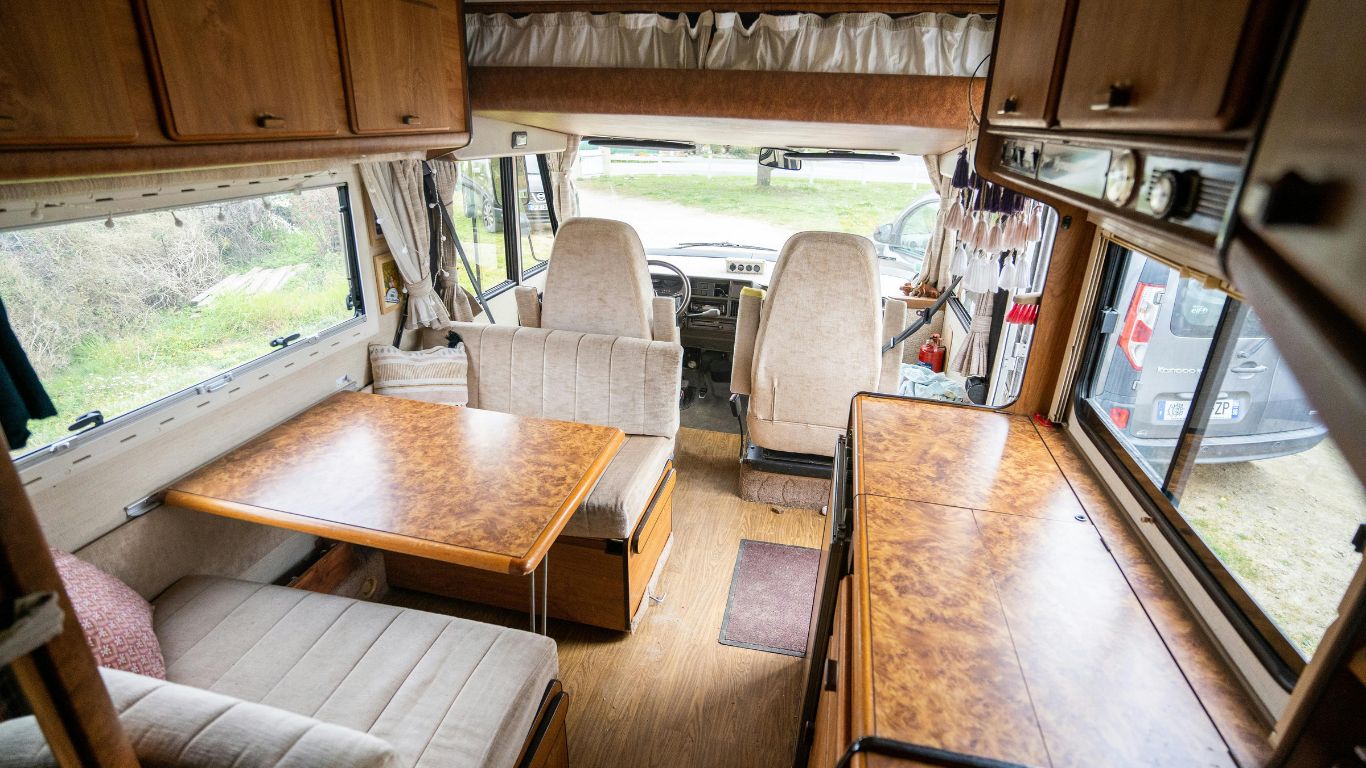
The cost of RV living BC can be lower than renting an apartment, but only under the right conditions. A paid-off RV on a reasonably priced long-term pad can create meaningful monthly savings. A financed RV with high maintenance, winter heating, storage and transport costs may not. To know whether the cost of RV living BC works for you, compare every monthly expense, the upfront cost of moving, depreciation and the value of anything you still own later.
This guide does not assume RV living wins.
It shows you how to do the maths.
If you are still deciding whether year-round RV living itself is practical, start with our guide to living in an RV year round in BC.
The biggest mistake in most cost comparisons is comparing:
RV pad rent
with:
Apartment rent
That is not a fair comparison.
The real cost of RV living BC may also include electricity, propane, insurance, maintenance, internet, laundry, storage, transportation and an RV loan.
Your apartment budget can include rent, electricity, internet, parking, laundry, tenant insurance and other recurring costs.
The first job is therefore to build the complete RV number.
| RV living cost | What to budget for each month |
|---|---|
| Long-term RV pad rent | Use the current rate for the specific lot that fits your RV or THOW. Pricing can vary by lot size, electrical service, length of stay and availability. |
| Electricity | Budget according to your actual power use and the billing arrangement for your lot. Winter heating, dehumidification and heated equipment can increase consumption. |
| Propane or other heating fuel | Base this on your RV’s heating system, how often it runs and current local fuel prices. Winter use can be significantly different from summer use. |
| RV insurance | Use the premium quoted for your specific RV and how it will be used, including full-time occupancy where applicable. |
| RV maintenance reserve | Set aside money regularly for servicing, roof seals, plumbing, batteries, tires, appliances and unexpected repairs. |
| Internet | Include the cost of the connection you actually need, including dedicated internet, mobile data or a backup service where necessary. |
| Laundry | Budget according to household size, how often you use the laundromat and the current washer and dryer charges. |
| Storage | Include storage only if you need extra space outside the RV or THOW. If you do not use paid storage, this cost can be zero. |
| Vehicle fuel and operating costs | Include your normal fuel use plus the operating costs created by your new location and regular driving habits. |
| Ferry or additional transportation | Include ferry fares, public transit, parking or other travel expenses if you expect to make regular trips between the Sunshine Coast and Metro Vancouver. |
| RV financing payment | Include the actual monthly payment if the RV or THOW is financed. If it is fully paid off, this cost can be zero. |
| Other recurring costs | Add household-specific expenses such as pet costs, additional data plans, winter equipment or other regular costs connected with your living arrangement. |
| Total monthly RV living cost | Add every cost that applies to your household. The resulting total is the number to compare with your current all-in housing cost. |
The most useful comparison is not apartment rent versus RV pad rent. Compare your complete apartment housing cost with your complete monthly RV living cost, including utilities, insurance, maintenance, financing and transportation.
The working is:
Total monthly RV cost = pad rent + electricity + propane + insurance + maintenance reserve + internet + laundry + storage + vehicle costs + transport + RV financing + other recurring costs
Do not remove an expense because it makes the cost of RV living BC look less attractive.
If you pay it because you live in the RV, it belongs in the calculation.
For electricity, use the billing method in your actual pad agreement. If you need a current utility-rate reference while checking your inputs, review BC Hydro business electricity rates.


An apartment renter normally does not personally replace the building’s furnace, roof or hot-water system.
An RV owner may be responsible for:
Some months may cost nothing.
Another month may bring a substantial repair.
That is why any serious cost of RV living BC calculation should contain a maintenance reserve rather than pretending repairs do not exist until something breaks.
Use:
Set aside a realistic monthly maintenance reserve based on the RV’s age, condition, service history and complexity. Older units or RVs with more systems may need a larger repair buffer than a newer, well-maintained unit.
rather than copying somebody else’s budget.
The monthly cost of RV living BC is only one part of the financial decision.
You may spend a significant amount before the first month begins.
That could include buying the RV, repairing it, transporting it, setting up winter equipment and arranging insurance.
| Upfront cost | What to budget for |
|---|---|
| RV or THOW purchase price | Use the actual purchase price of the RV or THOW you are considering, including any dealer or private-sale costs that apply. |
| Sales tax or transaction costs | Include any applicable taxes, transfer costs or transaction fees connected with the purchase. |
| Inspection before purchase | Budget for a professional inspection if you want the unit checked for structural, electrical, plumbing, moisture or mechanical problems before buying. |
| Initial repairs | Include any work needed to make the RV or THOW suitable for full-time use before move-in. |
| Registration and licensing | Add any registration, licensing or administrative costs that apply to the specific unit. |
| Insurance setup | Include the initial insurance premium or setup cost for coverage that reflects how the RV or THOW will actually be used. |
| Transport or towing to site | Budget for towing, professional transport or fuel if the unit needs to be moved to the long-term site. |
| Hitch or towing equipment | Include the cost of suitable towing equipment if you will be moving the RV yourself and do not already have the correct setup. |
| Winter water equipment | Budget for items such as a suitable heated hose, insulation or other cold-weather water protection if your setup requires them. |
| Approved skirting | Include skirting only if it is suitable for the RV, useful for your winter setup and permitted by the site. |
| Dehumidifier and moisture-control equipment | Budget for a suitable dehumidifier, hygrometer and any other equipment needed to manage coastal winter moisture. |
| Internet equipment and setup | Include routers, satellite equipment, installation or other setup costs if you need a dedicated or backup internet connection. |
| Storage setup | Include any initial storage cost if your belongings will not fit comfortably inside the RV or THOW. |
| Pad deposit or upfront payment | Include any deposit, advance payment or other move-in amount stated in the long-term residency agreement. |
| Other move-in costs | Add smaller setup expenses such as hoses, electrical adapters, levelling equipment, exterior mats, basic tools or household items needed for full-time use. |
| Total upfront RV cost | Add every one-time cost that applies to your move. This total should be included in your break-even calculation rather than ignored after move-in. |
The upfront total can change the financial picture significantly. Someone who already owns a suitable, paid-off RV may need relatively little additional spending, while someone buying and preparing a new unit can face a much larger initial cost.
This total matters because it affects the break-even point.
Someone who already owns a suitable RV may have relatively little upfront spending.
Someone buying a newer four-season RV specifically to reduce housing costs can have a completely different calculation.
That is why the cost of RV living BC cannot be judged from the pad rate alone.
Now compare the three housing options properly.
The cost of RV living BC needs to be measured against the complete apartment budget, not only advertised rent.
| Cost | Year-round RV lot | Vancouver one-bedroom | Sechelt one-bedroom |
|---|---|---|---|
| Base rent or pad rent | Use the current monthly rate for the specific RV or THOW lot that fits your setup. | Use the current asking rent for a comparable one-bedroom rental in Vancouver from a recent, clearly dated source. | Use the current asking rent for a comparable one-bedroom rental in Sechelt from the same type of source and reporting period. |
| Electricity | Include the actual electricity billing arrangement for the lot and your expected seasonal use. | Include any electricity the tenant pays separately from rent. | Include any electricity the tenant pays separately from rent. |
| Heating or propane | Include propane, electric heating or any other heating cost that applies to the RV. | Include renter-paid heating only where it is not already included in the lease. | Include renter-paid heating only where it is not already included in the lease. |
| Insurance | Use the premium for the RV under the way it will actually be occupied and used. | Include tenant insurance for the apartment. | Include tenant insurance for the apartment. |
| Maintenance reserve | Set aside a realistic amount for RV repairs, servicing, seals, plumbing, appliances, batteries and other owner responsibilities. | Routine building maintenance is normally handled by the property owner, so include only costs the tenant is actually responsible for. | Routine building maintenance is normally handled by the property owner, so include only costs the tenant is actually responsible for. |
| Internet | Include the internet service you actually need, including dedicated or backup service where necessary. | Include the monthly internet plan used in the apartment. | Include the monthly internet plan used in the apartment. |
| Laundry | Include laundromat charges if your RV does not have its own washer and dryer. | Include laundry costs where machines are not included in the rental. | Include laundry costs where machines are not included in the rental. |
| Storage | Include paid storage only if the RV or THOW does not hold everything you plan to keep. | Include any locker or off-site storage cost that is not already included in rent. | Include any locker or off-site storage cost that is not already included in rent. |
| Parking and vehicle costs tied to housing | Include vehicle costs created by the location, such as additional driving or regular ferry travel where applicable. | Include monthly parking charges and other housing-related vehicle costs. | Include parking or other housing-related vehicle costs where they apply. |
| RV financing | Include the actual monthly payment if the RV or THOW is financed. If it is paid off, this cost can be zero. | Not applicable. | Not applicable. |
| Total per month | Add every monthly RV cost that applies to your household. | Add rent and all renter-paid monthly housing costs. | Add rent and all renter-paid monthly housing costs. |
| Five-year operating total | Multiply the complete monthly RV operating cost by 60 months, then separately account for upfront purchase costs and estimated resale value. | Multiply the complete monthly apartment cost by 60 months, while allowing for any expected rent changes if your analysis includes them. | Multiply the complete monthly apartment cost by 60 months, while allowing for any expected rent changes if your analysis includes them. |
For a fair comparison, use rental figures from the same reporting period and the same type of source. Do not compare a Vancouver asking-rent figure with a Sechelt figure based on existing tenancies.
The RV column also needs one extra step: include the upfront cost of buying and preparing the RV, then subtract its estimated resale value at the end of the comparison period. That is what makes the five-year comparison meaningful rather than just a monthly rent exercise.
The RV five-year total is still incomplete until you account for:
Upfront purchase and setup cost
and:
The estimated RV value at the end of the period
Those numbers belong in the depreciation calculation below.
If you populate this table with an average rental figure, label the source and date.
The Vancouver and Sechelt figures should also use comparable measurements.
Do not compare:
or:
For an independent Canadian rental-market source, use the current CMHC Rental Market Survey data tables when selecting figures that match the comparison you want to publish.
A reader who understands the source of the figures is more likely to trust the final cost of RV living BC comparison.
This is where many claims about affordable RV living fail.
Suppose the monthly cost of RV living BC is lower than your current apartment.
You may still have spent a large amount buying and setting up the RV.
Those upfront costs have to be considered before claiming that the move has saved money overall.
Use:
Monthly savings = current apartment monthly total − RV monthly total
Populate it with:
Add your current rent and every housing cost you pay each month, including electricity, heating, internet, parking, laundry, storage and tenant insurance. Use that all-in figure as the apartment side of the comparison.
minus:
Add every monthly RV cost that applies to your household, including pad rent, electricity, heating, insurance, maintenance, internet, laundry, storage, transportation and any RV financing. Use that all-in figure as the RV side of the comparison.
equals:
Subtract your complete monthly RV living cost from your complete monthly apartment cost. If the result is positive, that is your monthly operating saving. If the result is negative, the RV costs more each month than the apartment.
If the result is negative, the RV costs more each month.
There is no operating-cost break-even point until that changes.
Do not automatically treat the entire RV purchase price as money that disappears.
If the RV still has resale value later, account for it.
Use:
Net upfront cost to recover = upfront cash invested − value of assets you expect to retain
Insert:
Add every one-time cost required before move-in, including the RV or THOW purchase, taxes, inspection, initial repairs, transport, insurance setup, winter equipment, internet setup and any applicable deposit or advance payment. Use that total as your upfront RV spending for the break-even calculation.
minus:
Estimate what the RV could reasonably be worth at the end of your comparison period by reviewing recent prices for similar units of the same age, model and condition. Use that expected resale value to avoid treating the entire purchase price as a permanent cost.
equals:
Subtract the RV’s expected resale value from your total upfront RV spending. The remaining amount is the net cost you need to recover through monthly savings before the move reaches its financial break-even point.
Use:
Break-even months = net cost to recover ÷ monthly operating saving
So:
Divide the net cost you need to recover by your monthly operating saving. The result is the number of months it takes for the lower monthly RV cost to recover the upfront financial difference. If there is no monthly saving, there is no break-even point based on operating costs alone.
This is one of the most useful numbers in the entire cost of RV living BC calculation.
If the break-even period is longer than you expect to remain in the RV, the move may not make financial sense.
If you already own the RV and need little additional investment, break-even may arrive much sooner.
Sometimes.
The cost of RV living BC is more likely to beat apartment renting under certain conditions.
That is why cheap housing should be judged using total cost rather than advertised rent.
A lower cost of RV living BC is not created by every expense magically becoming smaller.
Some categories can increase.
A renter normally does not budget personally for the building roof, plumbing system or furnace.
An RV owner does.
An RV has less space to heat, but construction and insulation vary considerably.
A poorly suited winter RV can require significant heating.
Moving away from work, family, medical services or frequent shopping can increase transport costs.
This is especially important for somebody moving from Metro Vancouver to the Sunshine Coast while travelling into the city regularly.
Apartment residents may already have closets, lockers or other storage.
Moving into a small RV may create a new monthly storage bill.
A shared connection may not meet the needs of a remote worker.
Dedicated internet, cellular backup or satellite service can increase costs.
RV appliances and systems can require specialist parts or technicians.
A smaller home does not necessarily mean every repair is cheap.
Depreciation is one of the most important parts of an honest cost of RV living BC analysis.
An RV is generally a depreciating asset.
Its future value can depend on:
Do not insert a generic annual depreciation percentage.
Use current comparable units when estimating what your RV may be worth later.
The calculation is:
Use the actual purchase price of the RV or THOW you are considering, including any applicable taxes, dealer fees or transaction costs. This gives you the correct starting value for the depreciation and break-even calculations.
minus:
Estimate the RV’s likely resale value at the end of your comparison period by reviewing similar units of the same age, model and condition. Use a realistic resale figure rather than assuming the RV will keep its original purchase value.
equals:
Subtract the RV’s expected resale value at the end of the comparison period from its original purchase price. The difference is the estimated depreciation, which shows how much value the RV may lose while you own it.
To express that as a monthly cost:
Estimated depreciation ÷ months owned = effective monthly depreciation cost
Insert:
Divide the RV’s estimated total depreciation by the number of months you expect to own it. The result gives you an approximate monthly depreciation cost that can be added to a long-term housing comparison.
The comparison needs to remain fair.
An apartment tenant normally finishes the rental period without owning the apartment.
Rent buys housing during that period, but it does not usually create an asset the tenant can sell afterwards.
An RV owner may finish the same five years with an RV that still has a resale value.
So the right question is not:
“Does the RV depreciate?”
It probably does.
The useful question is:
“What did each housing option cost me after accounting for the value of anything I still own?”
Owning an RV is not the same as owning a house, condo or land.
A resident renting an RV pad generally does not acquire an ownership interest in the land underneath it.
If that distinction matters to your long-term financial plan, read renting a year-round RV lot vs buying one.
There are plenty of situations where the cost of RV living BC does not beat apartment rent.
If:
RV payment + pad rent + utilities + insurance + maintenance
comes close to your apartment cost, the financial advantage may be small or nonexistent.
You may still prefer the housing arrangement.
That is a lifestyle decision rather than a cost-saving one.
A low purchase price does not guarantee low ownership cost.
An older unit with:
can consume the money you expected to save.
If you regularly travel between the Sunshine Coast and Metro Vancouver, include:
Those costs exist because of your housing location, so leaving them outside the comparison can make the cost of RV living BC look artificially low.
Buying an RV, equipping it, transporting it and selling it again quickly can create depreciation and transaction costs that monthly savings never recover.
If you leave an apartment but rent substantial storage indefinitely, count it.
Moving your belongings to another building does not make their storage free.
The calculation should also recognise genuine savings.
If your apartment charges for parking and your RV site includes suitable vehicle parking:
Compare what you currently pay for parking with what parking costs under the RV arrangement. If the RV setup reduces that expense, the difference is a real monthly saving that should be included in the comparison.
If the RV community includes a gym you genuinely use and you cancel a paid membership:
Compare your current gym membership cost with the fitness facilities included in your RV living arrangement. If you can cancel a paid membership because you genuinely use the on-site gym, that difference can be counted as a monthly saving.
Do not count an amenity you never paid for before.
If your current apartment requires paid storage and your new setup eliminates it, include the actual reduction.
A remote worker who stops commuting may spend less on:
Only count this if the move genuinely changes the commute.
If water, sewer, trash or another service is included in the site agreement but paid separately under your current housing arrangement, include that real difference.
A trustworthy cost of RV living BC calculation includes both the uncomfortable expenses and the legitimate savings.
Before moving, calculate these figures.
Add your current rent and every housing-related cost you pay each month, including utilities, internet, parking, laundry, storage and tenant insurance. Use that total as your current all-in monthly housing cost for the comparison.
Add every monthly RV living cost that will apply to your household, including pad rent, electricity, heating, insurance, maintenance, internet, laundry, storage, transportation and any RV financing. Use that total as your proposed all-in monthly RV cost.
Subtract your proposed all-in monthly RV cost from your current all-in monthly housing cost. A positive result is the amount you may save each month, while a negative result means the RV arrangement would cost more than your current housing.
Add every one-time cost required to move into RV living, then subtract any value you expect to recover from the RV or other assets at the end of the comparison period. The remaining amount is the net upfront cost of switching to RV living.
Then:
Divide the net upfront cost of switching to RV living by the amount you expect to save each month. The result is the approximate number of months needed to recover the upfront cost. If there is no monthly saving, there is no financial break-even point based on housing costs alone.
If there is no monthly saving, do not call the move a money-saving strategy.
It may still be the right home.
Just make the decision for the correct reason.
It can be. The cost of RV living BC depends on pad rent, RV financing, utilities, insurance, maintenance, storage, transportation and your current rent. Compare complete monthly totals rather than pad rent against apartment rent.
There is no single useful figure. Calculate pad rent, electricity, propane, insurance, maintenance, internet, laundry, storage, transportation and any RV financing.
Removing an RV loan payment can substantially reduce the cost of RV living BC, but you still need to account for site rent, utilities, insurance, maintenance and transportation.
Yes. If you want an honest long-term comparison, estimate the change between the purchase price and likely future resale value.
Apartment rent pays for your housing during the rental period, but it normally does not create an asset you can later sell. That should be considered alongside RV depreciation.
Common categories include maintenance, heating, insurance, storage, internet upgrades, transportation and upfront winter preparation.
Calculate your monthly saving against your current housing cost. Then divide the net upfront cost of moving into RV living by that monthly saving.
It can be affordable for some households, particularly when the RV is already owned and an appropriate long-term site is available. It is not automatically cheaper for someone financing an expensive RV or carrying high maintenance and transport costs.
The cost of RV living BC is not one provincial average.
It is a household calculation.
A person with a paid-off, winter-capable RV and a reasonably priced long-term site starts in a very different position from somebody financing a new motorhome.
The apartment side varies too.
Someone leaving a high-cost Vancouver rental may have more room to save than someone already paying below-market rent in Sechelt.
So do not stop at:
“Is RV living cheaper?”
Ask:
“What will my complete monthly housing cost be under each option, what will it cost me to switch, what asset will I still own, and how many months will it take to recover the difference?”
If you are considering a Sunshine Coast move but want to understand the winter implications before finalising the budget, read winter RV living on the Sunshine Coast.
If the maths still works after including the inconvenient expenses as well as the obvious savings, you can compare the current year-round RV lots at Halfmoon Bay.
Send Halfmoon Bay:
The comparison can then use your situation instead of a generic claim about cheap RV living.
If you want to compare your current housing costs with long-term RV living, send Halfmoon Bay RV Resort your current rent, typical monthly utilities, parking or storage costs, whether you already own an RV, and the type of long-term lot you would need.
Management can then help you compare your current situation with the likely cost of a suitable year-round RV lot.
Request a personalised cost comparison
 See map of resort