


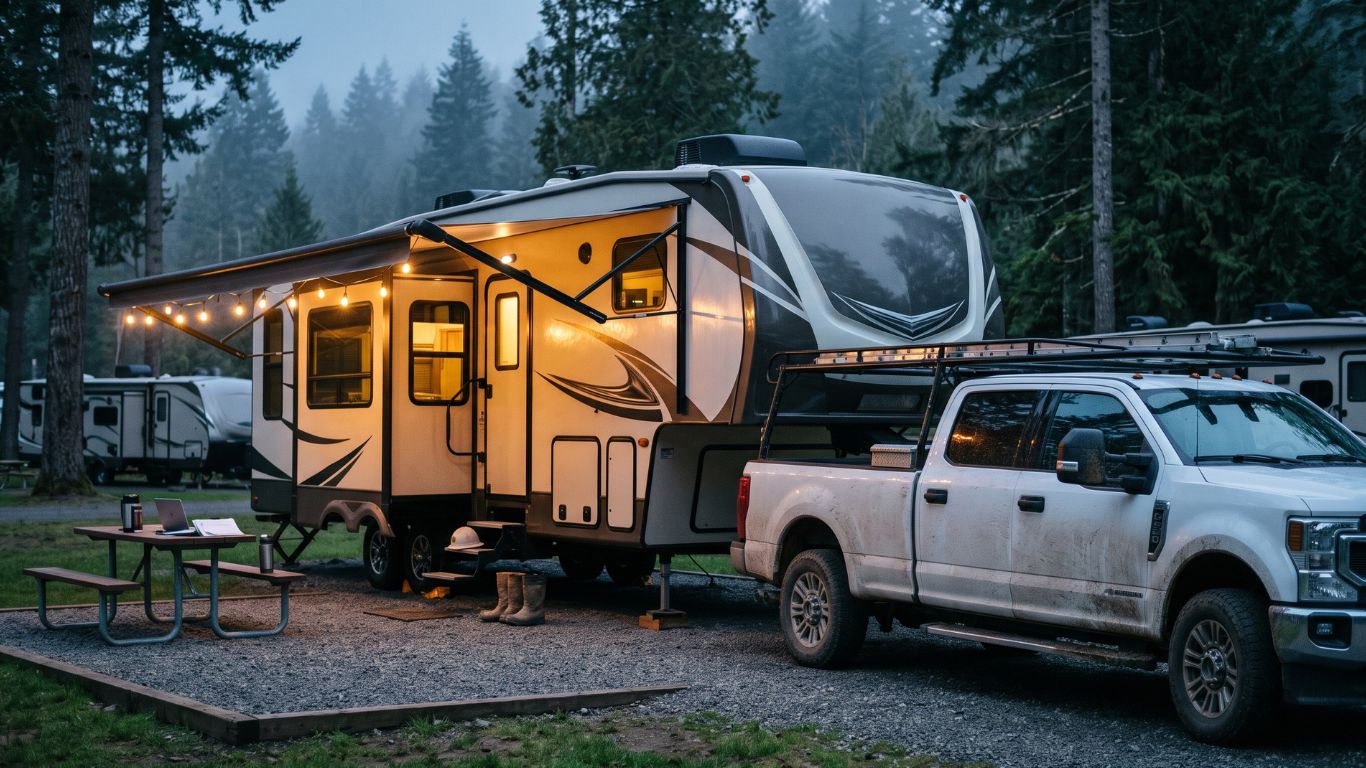
Anyone who has tried to find a rental on the Sunshine Coast knows the feeling. You find a listing, you message the landlord within four minutes, and by the time you hit send there are already eleven other people ahead of you. Now picture being the crew boss who needs a place for six guys, three work trucks and a trailer full of gear by Monday. Fun, right?
If you run a trades crew, manage a project, or you’re a solo contractor heading to the Coast for a job that runs anywhere from two to twelve months, this guide is for you. We’ll walk through why a serviced RV pad can be the least painful housing answer on this side of the ferry, what to look for in terms of power and parking, and the questions worth asking before you commit. No fluff, and only the occasional ferry joke.
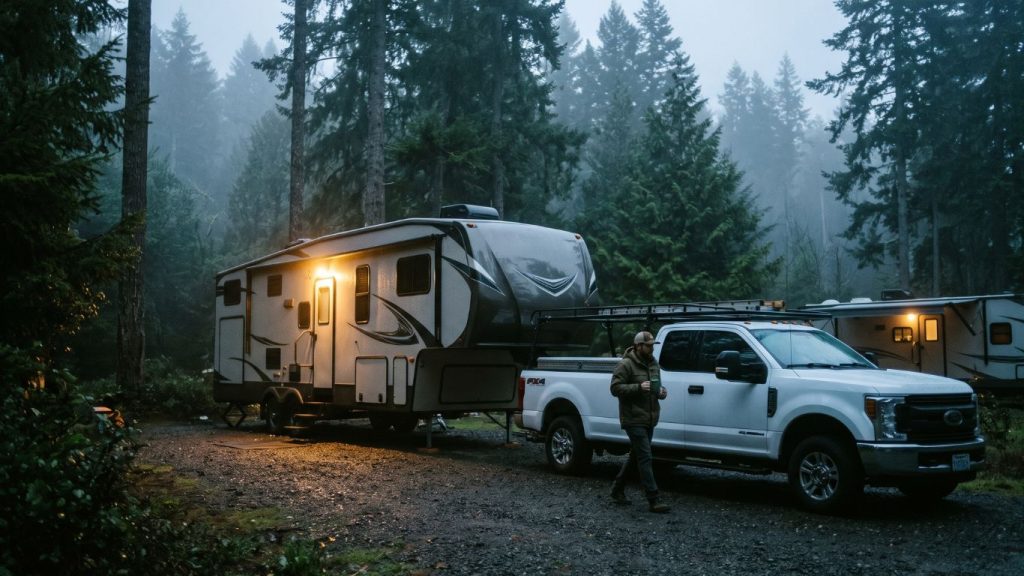
The Sunshine Coast isn’t a place you can drive to and fix with a quick motel booking. You’re coming over on BC Ferries, so every trip back to the Lower Mainland for parts, a missed tool or a Saturday off comes with a sailing schedule attached. Once you’re across, the housing options for a working crew tend to look like this:
There’s plenty of work to go around, too. The Sunshine Coast Regional District’s own fourth-quarter projects update (published January 2026) lists water meter installations in the District of Sechelt, work on the Halfmoon Bay Community Hall, a UV upgrade at the Chapman Creek water treatment plant and more besides. That’s public infrastructure alone, before you count private builds, renovations and new homes. Where there’s work, somebody needs a bed and a place to park the truck.

An RV or travel trailer on a serviced pad is a very old trick in the construction world, and for good reason. It’s a self-contained bedroom, kitchen and washroom that travels with you, and the pad itself delivers the things a work camp usually has to improvise. At a proper RV resort you’re looking at:
Halfmoon Bay RV Resort sits on 20 acres of forest, with 80 RV lots, about two minutes off the Sunshine Coast Highway. The resort puts Sechelt about 20 minutes away and the Langdale ferry terminal about 40 minutes away, which matters when you’re doing the maths on morning drive times and Friday afternoon sailings.
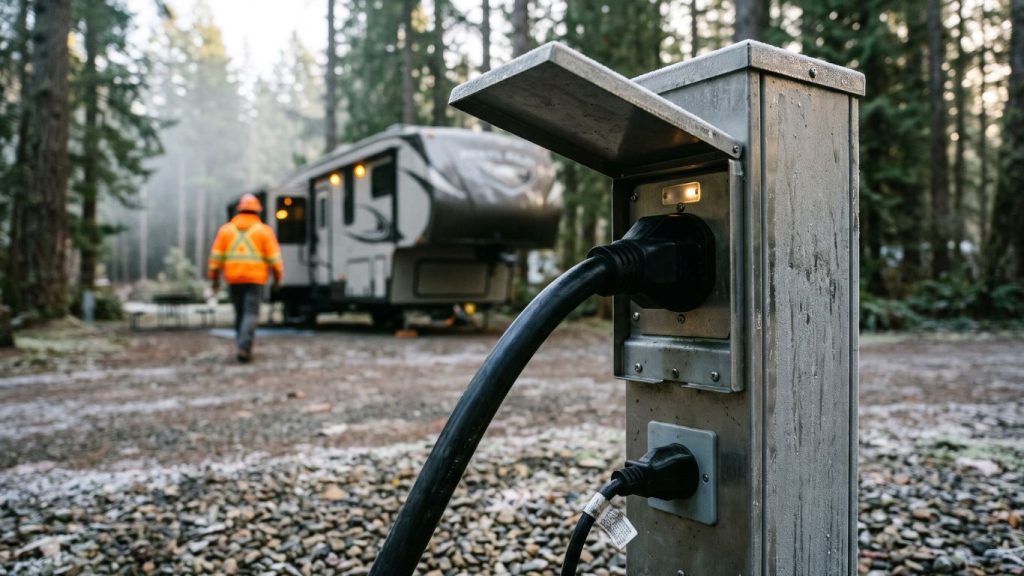
Ask any tradesperson what they’d pick first on a pad and the answer is almost always the same: amps. A tidy little trailer is fine on a modest service, but a larger rig with electric heat, a couple of space heaters, a welder charger and a few laptops will happily trip a breaker at 6 a.m. on a cold November morning.
Halfmoon Bay RV Resort offers 30, 50, 100 and 200 amp service options. Which one you need depends on the rig and how you live in it, and we’ve put together a plain-language breakdown in our guide to 30 vs 50 vs 100 amp RV pads. The short version for crews:
For a broader look at how pad rates and power fit together, our post on RV pad rental costs and power options on the Sunshine Coast is the one to bookmark.
This is the question that surprises crews most. It isn’t whether the trailer fits; it’s whether the truck, the utility trailer and the second truck fit too. Before you book anything, sort out three things with whoever runs the park:
We’d rather you ask and get a clear answer than assume and get an awkward knock on the trailer door. Tell us what you’re hauling when you get in touch.
Once the truck is parked and the power’s on, the daily rhythm of a crew comes down to a handful of small things. Resort life is surprisingly well suited to them:
If you also have nurses, locums or healthcare contractors in your network, send them our way too. We wrote a separate guide on housing for travel nurses and contract workers on the Sunshine Coast, because the same logic applies.
Every job is different, but most crew stays on the Coast follow a similar pattern. Here’s roughly how it plays out when it goes well:
Whether it’s us or anyone else, these are the questions that save a project from a mid-job scramble. Copy and paste them into your next email:
We don’t publish a one-size-fits-all rate sheet for crew stays, and we won’t pretend there is one. The honest answer to most of the above depends on your rigs, your timeline and how many people you’re bringing. That’s exactly why a quick call beats a guess.
Logistics on the Coast always come back to the ferry. If your crew is coming from the Lower Mainland, check the sailing schedule before you plan a start date, and build in a buffer for heavy-load days. If you’re bringing a large rig, our Langdale to Horseshoe Bay ferry guide for RVs and trailers walks through what to know before you line up. Arriving mid-week and off-peak is usually the smoothest way to do it, and your coffee will still be warm.
If you’ve got a start date, a rig and a rough idea of how many people are coming, the next step is easy. Browse what’s available on our properties page, tell us about your crew, and we’ll talk through what works. Or skip the form and call the resort on (604) 218-4757. Mention the job, the timeline and the number of rigs, and we’ll get the conversation started.
Your crew builds the Coast. We’ll make sure they have somewhere decent to put their boots at the end of the day.
 See map of resort