


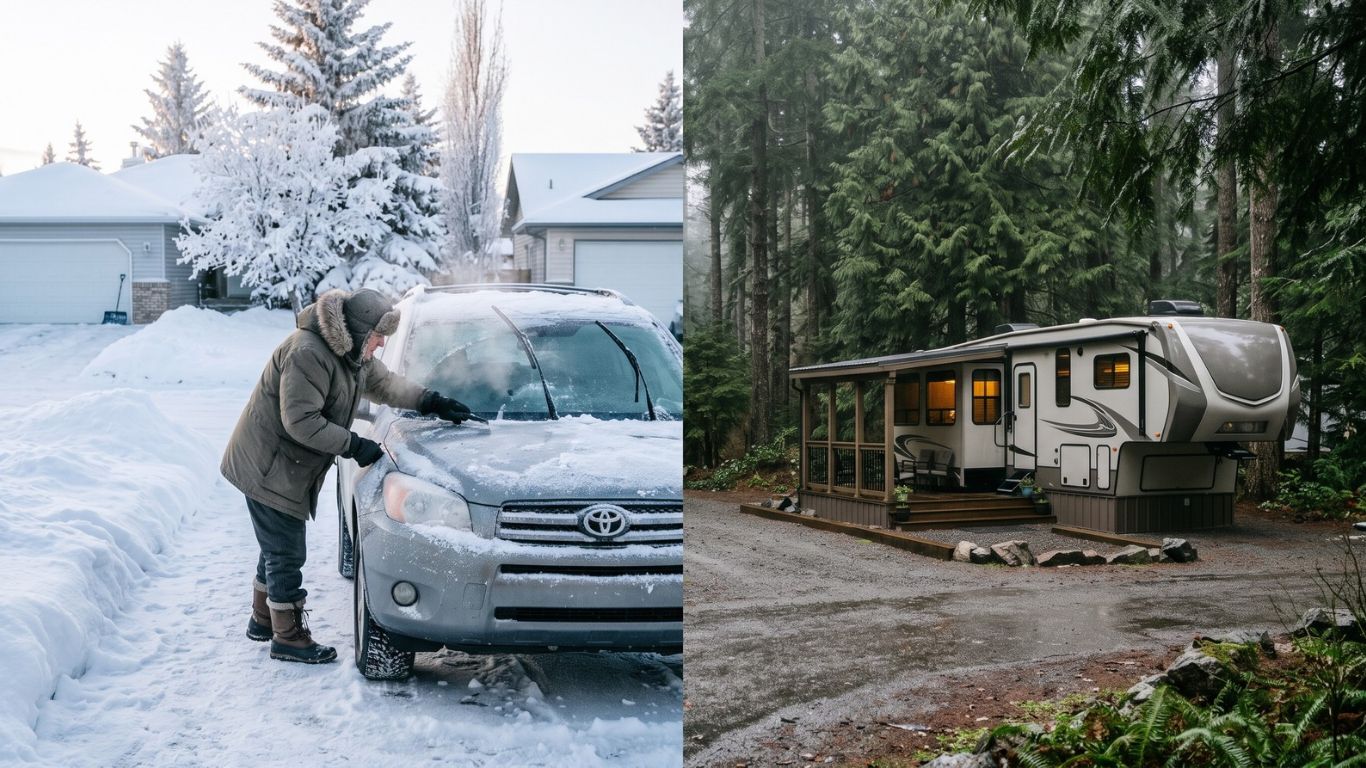
Every October, somewhere around the second cold snap, an Albertan stands in a driveway scraping a windshield and has the same thought: there has to be a better way to do this. For decades the answer was Arizona. Lately a growing number of RVers are giving a different answer, which is staying in Canada and heading to the Coast.
This guide is for the Alberta and Prairie RVer who is curious about a domestic snowbird winter. We will be straight about the weather (spoiler: it rains), walk through the drive, and cover what to sort out before you commit to a winter pad at Halfmoon Bay.
The classic snowbird plan has a lot going for it, sunshine being the obvious one. It also comes with homework: border crossings, a fluctuating exchange rate, travel health insurance, and a long haul south with a rig behind you. Staying in Canada trims most of that list.
It is not Arizona, and we will not pretend it is. If your winter goal is a daily sunburn, this is the wrong post. If your goal is to stop shovelling, keep the heating bill reasonable and enjoy a green, quiet winter, keep reading.
Let’s put real numbers next to each other. According to Environment and Climate Change Canada’s 1981 to 2010 climate normals, as reported by Current Results, a typical January in Calgary has an average high of about -1°C and a low of about -13°C. Edmonton sits colder again, with an average January high near -6°C and a low near -15°C.
Now the Coast. The climate normals for nearby Merry Island Lightstation, summarized on the Sechelt climate table from the same Environment and Climate Change Canada data, show a January mean daily high of 7.1°C and a mean daily low of 3.6°C. Average January snowfall is 5.3 cm, compared with a season that can run for months on the Prairies.
Here is the part we promised to be honest about. That same table puts average January precipitation at 135.5 mm, and the annual total at about 1,029 mm. In plain language, the Coast trades extreme cold for drizzle. Think of it as swapping a parka for a good rain jacket. You will own both a rain jacket and a strong opinion about it by February.
Is that a fair trade? Plenty of people think so. A 7 degree afternoon with a hot coffee and a rain-streaked window is a very different thing from a -15 morning with a plugged-in block heater. Coast winters also come with long stretches of walkable, hoodie-weather days between the rainy ones, which is when the trails and beaches around Halfmoon Bay are at their quietest.
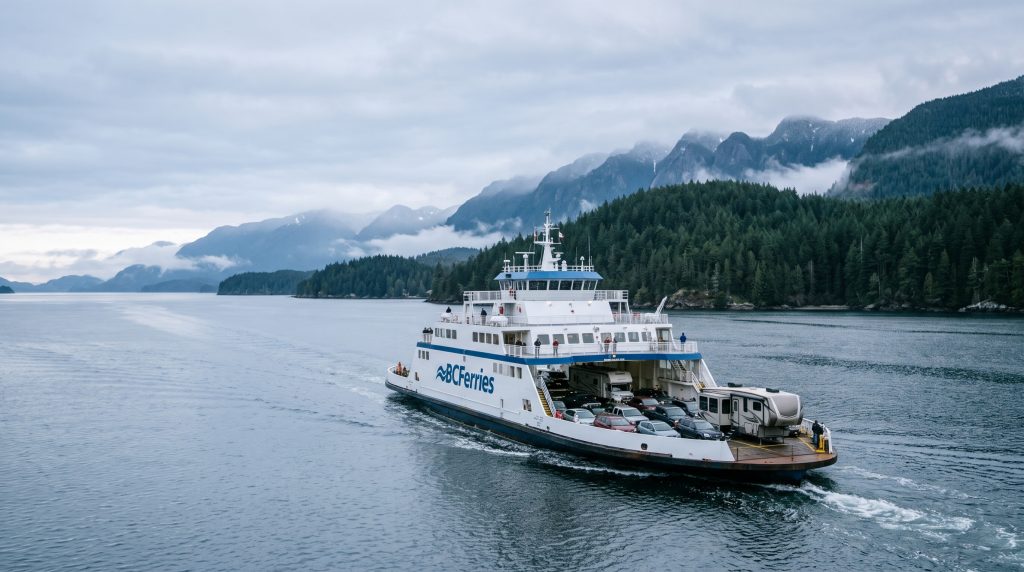
The drive is the part people overthink. The route is simple: head west across the Rockies and down into the Lower Mainland, then make your way to Horseshoe Bay in West Vancouver, where the BC Ferries sailing to Langdale puts you on the Sunshine Coast. From the Langdale terminal it is a scenic drive up the Sunshine Coast Highway toward Sechelt and on to Halfmoon Bay.
Two practical points. First, check the current sailing times and reservation options directly on the BC Ferries Horseshoe Bay to Langdale schedule page before you set a travel day, because a long-weekend line-up with a fifth wheel behind you is a character-building experience nobody needs. Second, read our Langdale to Horseshoe Bay ferry guide for RVs and trailers so you know about rig length, fares and what to expect at the terminal.
Mountain passes can be icy in late fall, so many Albertans time the trip for early to mid October or pick a clear weather window rather than going the week of the first big storm. Winter tires are your friend, and so is a flexible schedule.
A summer campsite and a winter home base are two different things. Before you book anywhere for the cold months, ask these questions.
Halfmoon Bay RV Resort is set up for people staying through the off-season, with Wi-Fi, a laundromat and pet-friendly sites. If you want the longer version of what winter living involves, our guide to winter RV living on the BC Sunshine Coast walks through setup, heating and moisture control.
The Coast’s main winter enemy is not cold, it is damp. Prairie RVers are used to dry cold and sometimes arrive with the wrong instincts. A few habits make a big difference.
None of this is hard. It is just different from what works at -15°C, and it is easier to adjust to when you know it is coming.
A winter away from home is mostly logistics. Here is a checklist to run through before you hit the highway.
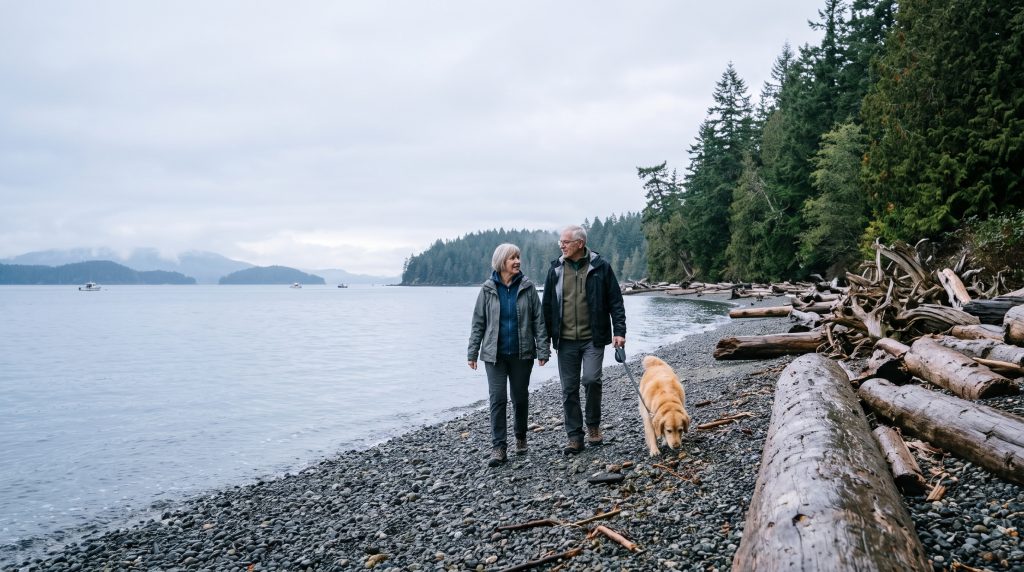
People often ask what they will do with themselves for three or four months. The honest answer is that winter on the Coast has a rhythm. Mornings are for coffee and watching the weather decide what kind of day it will be. When the rain lets up, you walk a beach, a trail or the road to the General Store. Afternoons are for the laundromat, a good book, or a video call with the family back in Alberta, who are, by this point, wearing two toques.
You will find that other residents are friendly and unhurried. Community at a long-stay park builds quickly, and the shared experience of being on the Coast for the winter makes for easy conversation, especially if you are all grumbling about the same Tuesday downpour.
It depends on what you want from the season. If you need heat and sunshine on your skin, Arizona still wins, and no amount of cheerful writing will change that. If you want a calm, green and temperate winter close to home, with no border, no exchange rate and no frozen driveway, the Sunshine Coast makes a compelling case.
The best way to know is to see the place. Take a look at the pads available now, picture your rig parked among the evergreens, and imagine your first February without a snow shovel.

Ready to trade the Prairie freeze for a Coast winter? Browse available pads and submit a request, and we will get back to you with dates, services and everything else you need to plan your stay. Bring a rain jacket. We will supply the evergreens.
 See map of resort