


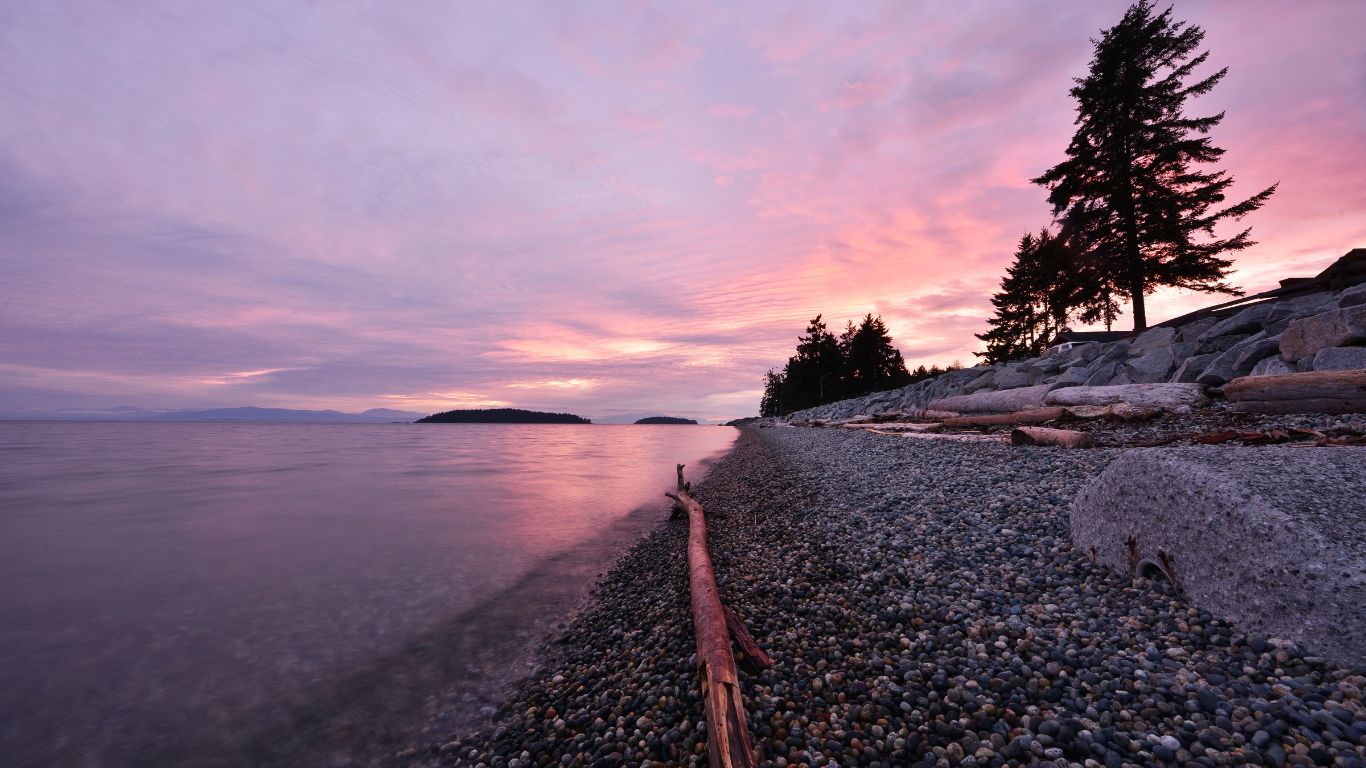
The most useful thing to understand about winter RV living BC is that a Sunshine Coast winter is usually a wet-coast problem before it is a deep-freeze problem. Rain, damp air, condensation, wet clothing and hidden moisture can cause more daily trouble than extreme cold. Freezing conditions still happen, so plumbing needs protection, but keeping an RV dry is just as important as keeping it warm.
That makes winter RV living BC quite different from much of the generic winter advice written for the Prairies or colder parts of Canada.
You still need dependable heat, protected water connections and a plan for cold weather. But if you concentrate only on frozen pipes and ignore moisture, your first coastal winter can become uncomfortable very quickly.
The Sunshine Coast has a mild, moist coastal climate.
Winter usually means more rain, damp ground, shorter days and periods of colder weather rather than months of severe deep freeze.
That sounds easier.
In some ways, it is.
But winter RV living BC on the coast creates a different set of problems.
Several wet days in a row can leave:
Then everybody comes indoors.
Inside a relatively small RV, people:
All of that adds moisture to the indoor air.
That is why successful winter RV living BC depends on four basic jobs:
Sunshine Coast Tourism describes the region as having a mild coastal climate with wetter winter conditions. Its Sunshine Coast weather information is useful when planning for the season.
The important point is simple:
Do not prepare for the Sunshine Coast as though extreme cold is your only problem.
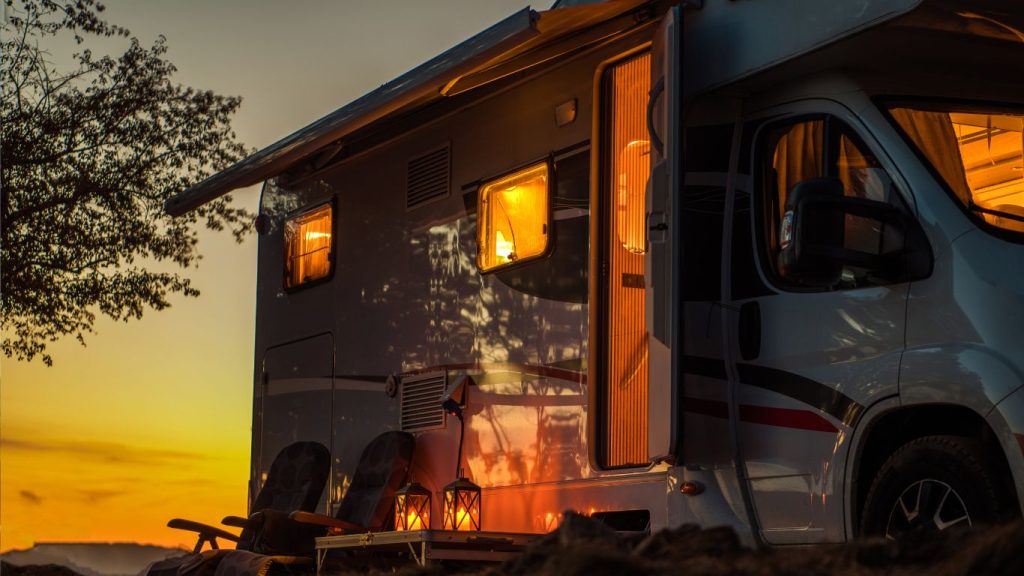
For many people trying winter RV living BC for the first time, condensation is the surprise.
You may expect cold floors.
You may expect higher heating use.
You may not expect to wipe water from a window every morning.
RV condensation winter problems start when warm indoor air carrying moisture reaches a colder surface.
Common places include:
Those are the areas you can see.
The hidden areas matter even more.
Check:
A mattress can feel dry on top while moisture collects underneath it.
That is one of the classic first-winter mistakes.
Persistent moisture can eventually support mould growth and damage interior materials.
This is why winter RV living BC requires more than simply turning up the furnace.
Heat helps with comfort.
It does not automatically remove moisture.
You need a combination of:
If the RV feels warm but constantly smells damp, something still needs attention.
A good coastal winter setup balances heat with moisture removal.
Completely sealing the RV because you do not want to lose warm air can make humidity worse.
A hygrometer gives you a useful picture of what is happening inside the RV.
Check it:
Watching humidity trends is more useful than waiting until the windows are covered in water.
A suitable dehumidifier can be one of the most useful tools for winter RV living BC.
Choose equipment based on:
One person in a small trailer creates a different moisture load from two adults and a wet Labrador in a large fifth wheel.
Run the bathroom fan during and after showers.
Use an externally vented kitchen fan while cooking.
Avoid drying large amounts of wet laundry inside if you have another option.
Open cupboards from time to time so warm air can reach colder exterior surfaces.
Give mattresses and cushions room to breathe.
These are small habits.
They are also some of the most important habits in winter RV living BC.
RV skirting BC residents install around a stationary RV can help reduce cold airflow underneath the unit.
That can improve floor comfort and add protection around:
Skirting is not a magic winter upgrade.
It will not turn a poorly insulated summer trailer into a proper winter home.
It must also be installed without blocking equipment that needs safe ventilation.
Check around:
If you live in a managed RV community, confirm the rules before installing skirting.
No.
The answer depends on:
For some people doing winter RV living BC, skirting is a useful part of the setup.
For others, the existing RV construction may provide enough protection.
Judge the actual RV rather than copying somebody else’s winter setup.
A four season RV coastal BC residents use through winter should be judged by its construction rather than a marketing sticker.
Look at the full system.
Check:
One strong specification does not make the entire RV winter-ready.
A powerful furnace does not solve exposed plumbing.
A heated tank does not prevent badly sealed windows from creating constant condensation.
For winter RV living BC, the whole system has to work together.
If you are still deciding whether full-time RV living itself suits you, read living in an RV year round in BC.
A coastal climate still gets freezing conditions.
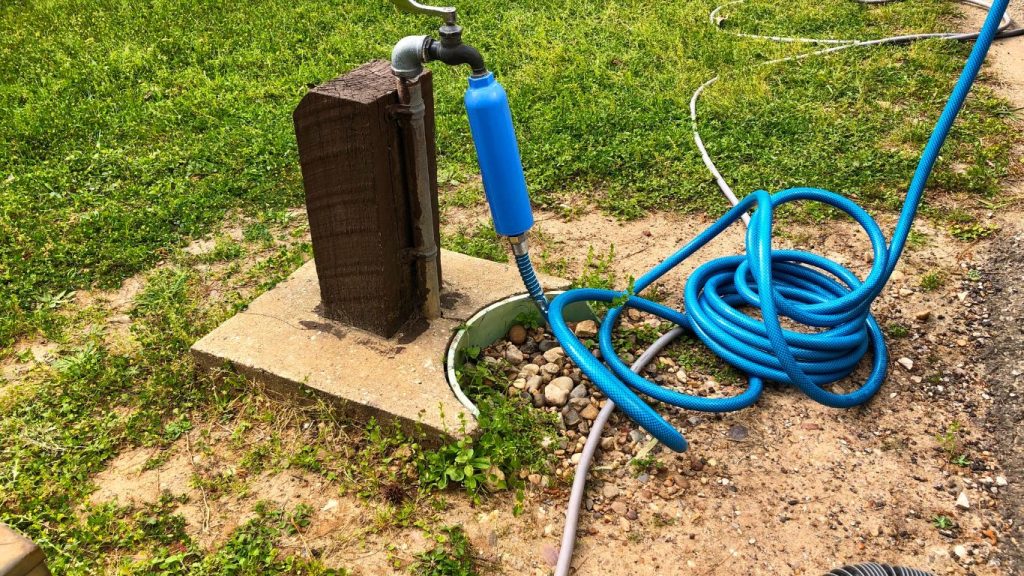
A heated water hose RV setup can help protect the hose, but the hose is only one section of the water system.
Think through the entire connection:
Site tap → fitting → pressure regulator → filter → hose → RV inlet → internal plumbing
Any exposed section can become the weak point.
A common mistake in winter RV living BC is buying a heated hose and thinking the water problem has been solved.
The hose may remain protected while:
Inspect the full connection.
Watch for:
A year-round RV park can provide winter water service without every exposed component being immune to cold.
Ask how the specific site works in winter.
Then understand which parts of the system belong to the park and which parts belong to your RV.
A direct sewer connection makes winter RV living BC considerably easier.
You do not need to move your home every time the tanks need attention.
But your RV’s wastewater system still needs proper management.
Make sure:
Do not assume that leaving every waste valve permanently open is the best approach.
Follow the RV manufacturer’s instructions for your particular system.
A full-hookup lot reduces the work.
It does not remove your responsibility for the plumbing.
There is no honest universal winter heating cost for an RV.
The amount depends on:
That is why people comparing winter RV living BC should track their own winter energy use.
| Heating option | Main consideration | Cost approach |
|---|---|---|
| RV propane furnace | Designed for the RV and may also help warm protected plumbing areas | Track actual propane use |
| Built-in electric heat | Convenient where the RV and site support the electrical load | Track actual electricity use |
| Approved portable electric heat | Useful as supplemental heat when safely operated | Include its electrical consumption |
| RV heat pump | Can work well under suitable conditions but has operating limits | Compare use with other heating methods |
| Mixed propane and electric heat | Gives flexibility as conditions change | Track both energy sources |
Winter adds electrical equipment.
You may be running:
Then somebody switches on the kettle.
And the microwave.
A 30-amp system has different limits from a 50-amp system.
Halfmoon Bay has different electrical service levels across its RV lots, so site selection should match the requirements of the RV.
For a wider housing budget, read the cost of RV living BC.
Good winter RV living BC starts before the wettest and coldest weather arrives.
| Task | When to do it | Cost | DIY or professional |
|---|---|---|---|
| Inspect roof and exterior seals | Before regular winter rain | Depends on whether repairs are required | DIY inspection; professional repair when needed |
| Test furnace | Before daily winter use | Depends on servicing required | Professional where servicing is needed |
| Inspect propane equipment | Before heavy winter use | Depends on system condition | Qualified professional |
| Test smoke, CO and propane alarms | Before winter and according to manufacturer guidance | Replacement cost only if needed | Usually DIY testing |
| Check batteries and charging system | Before winter | Depends on battery condition | DIY or technician |
| Inspect water connections | Before freezing weather | Usually limited if equipment is already suitable | Often DIY |
| Add suitable water protection | Before freezing periods | Depends on the existing setup | DIY or professional |
| Install approved skirting if needed | Before colder weather | Depends on RV size and system | DIY or professional |
| Set up dehumidifier | Before persistent wet weather | Depends on equipment selected | DIY |
| Test ventilation fans | Before wet season | Repair cost only where necessary | DIY check or technician |
| Check airflow around mattresses | Before and throughout winter | Usually no major cost | DIY |
| Confirm park winter procedures | Before move-in or autumn | No cost to ask | Confirm with management |
| Prepare for power interruptions | Before winter storms | Depends on existing equipment | DIY planning or professional installation |
Do not wait for a freezing night to find out what does not work.
Conditions vary from year to year, so use this as a maintenance guide rather than a weather forecast.
| Month | Typical RV-living pattern | What to watch |
|---|---|---|
| October | Cooler, wetter weather starts changing daily routines | Roof seals, furnace testing, first condensation |
| November | Dampness becomes harder to ignore | Humidity, wet clothing, drainage, water protection |
| December | Winter systems work harder | Heating, batteries, propane, plumbing protection |
| January | Weaknesses in the setup become easier to spot | Hidden moisture, mould, electrical loads, tanks |
| February | Winter routines have been running for months | Ventilation habits, seals, damp storage spaces |
| March | Conditions begin moving towards spring | Accumulated moisture, roof checks, winter equipment condition |
Successful winter RV living BC is repetitive.
You keep checking the same things because small problems change over time.
A serviced year-round site removes some of the hardest parts of improvised winter RV living.
Halfmoon Bay operates year-round and provides serviced RV lots with potable water, sewer connections and electrical infrastructure.
That means residents can remain connected to basic site services rather than repeatedly moving their RV for water, wastewater or electricity.
But there is an important division of responsibility.
A year round RV park winter servicing setup gives residents established infrastructure such as:
The RV owner remains responsible for:
Halfmoon Bay does not present resident RV winterisation as a service performed by resort staff.
When professional RV work is needed, residents arrange suitable technicians.
That distinction matters in winter RV living BC.
A serviced site supports the home.
It does not maintain the home for you.

The first coastal winter often teaches people that the small things matter most.
The top looks fine.
The underside is damp.
Lift mattresses and inspect them regularly.
More heat is not always the solution.
If humidity stays high, increase moisture removal and airflow.
The water system is only as protected as its weakest exposed component.
Winter requires a proper place for:
Otherwise they steadily add moisture to the RV.
People add one winter appliance at a time.
A heater.
A dehumidifier.
A heated hose.
Then the normal kitchen appliances are still being used.
Know the limits of the electrical service.
Summer fuel use may tell you very little about winter.
Watch the tank rather than guessing.
Repeated winter rain can expose roof and seal problems that stayed unnoticed in summer.
Deal with dampness early.
Even an RV connected to shore power may still rely on its 12-volt system for important functions.
Know what happens if shore power stops.
The Sunshine Coast can still experience freezing conditions.
Mild climate does not mean unprotected plumbing.
This is perhaps the biggest misunderstanding about winter RV living BC.
A year-round site lets you stay through winter.
It does not remove the maintenance that comes with owning an RV.
Yes.
But can you live in an RV in winter in Canada is too broad to have one useful answer.
Canada includes dramatically different climates.
Coastal BC is not the Prairies.
The Sunshine Coast is not northern British Columbia.
For winter RV living BC on the coast, the practical priorities are:
You are not trying to pretend winter does not exist.
You are preparing for the winter you actually have.
Yes. Winter RV living BC is possible on the Sunshine Coast when the RV is suitable for the season and the site supports year-round occupancy. Residents still need heating, moisture control, winter-ready plumbing and regular maintenance.
It involves different challenges from colder parts of Canada. Prolonged extreme cold may be less central, while rain, damp air and condensation become more important.
Not for every RV. Skirting can reduce cold airflow beneath a stationary unit and help protect vulnerable components. The need depends on the RV and site.
A heated hose can help during freezing weather, but it protects only the hose. Regulators, fittings, filters and the RV inlet may also need protection.
Successful winter RV living BC usually requires steady heating, ventilation, airflow and dehumidification. Check hidden spaces as well as visible windows.
Residents are responsible for preparing and maintaining their own RV. Professional RV servicing should be arranged with appropriate technicians when needed.
No. Site infrastructure makes winter RV living BC easier, but exposed RV-side plumbing and fittings can still be affected by cold conditions.
A genuinely winter-capable unit can make winter RV living BC much easier. Look at actual insulation, plumbing protection, tanks, windows and heating design rather than relying only on a marketing label.
Successful winter RV living BC is not about proving how much cold you can tolerate.
On the Sunshine Coast, it is about managing a small home through wet, cool and occasionally freezing conditions.
Keep the RV warm.
Keep it dry.
Vent moisture.
Check hidden spaces.
Protect the entire water connection.
Understand your electrical limits.
Watch fuel levels.
Fix leaks quickly.
Have a backup plan.
And choose a site designed to remain in operation through winter.
If you are comparing communities, the best year-round RV parks in BC should be judged on winter infrastructure as well as summer amenities.
If winter RV living BC is the main question stopping you from considering full-time RV housing, review the year-round RV lots at Halfmoon Bay and ask about the water connection, sewer, electrical service and winter procedures for the specific lot you are considering.
That tells you much more than simply seeing the words “open year-round.”
 See map of resort