


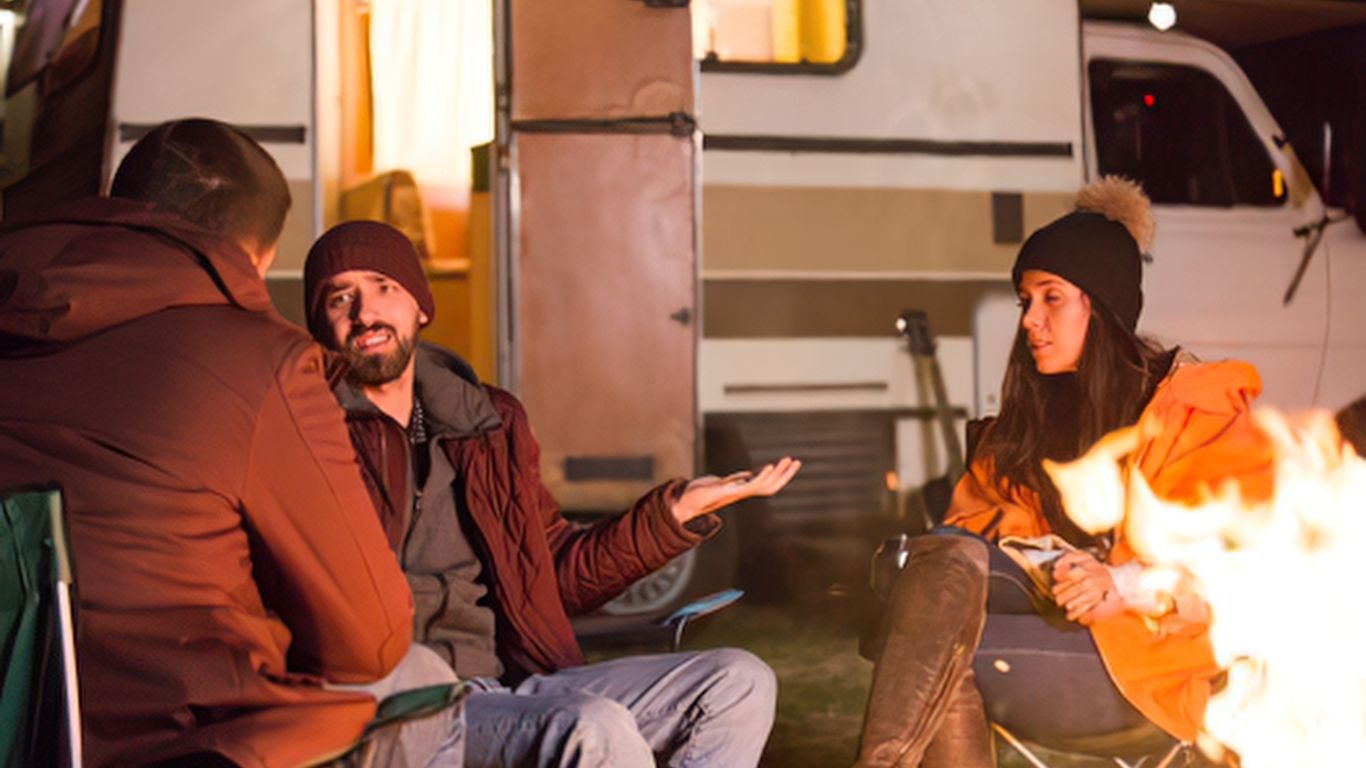
When your summer campground closes for the season, your RV does not suddenly stop being a home.
For Canadian RVers who want to stay put through winter, September is often the time to start looking seriously for a winter RV pad rental in BC.
The important word is winter.
A site that works beautifully in July may be completely unsuitable in January.
You need more than an open gate.
For an October 2026 to April 2027 stay, you need to know whether the campground can support everyday winter life with:
For RVers who would rather stay in Canada than head south for the entire winter, the Sunshine Coast offers an interesting alternative.
Lower-elevation winter days on the Sunshine Coast typically sit around 2°C to 10°C, according to Sunshine Coast Tourism’s winter guide. The region still gets rain, wind, damp weather and occasional freezing conditions, but the coastal winter is generally milder than the deep cold experienced in many Interior BC locations.
At Halfmoon Bay RV Resort, that coastal setting is combined with year-round RV living, serviced pads and access to Sechelt about 20 minutes away.
For people comparing monthly winter RV sites on the Sunshine Coast, that can make Halfmoon Bay worth looking at before autumn inventory tightens.

Summer camping is easy to think about.
Does the site fit?
Is there power?
Where is the beach?
Winter living asks harder questions.
You need to know what happens when:
That is why a winter site should be chosen as a seasonal home base, not just an off-season campsite.
If you intend to stay from autumn through spring, get the winter details in writing before moving.
Many RVers begin looking for winter accommodation after their summer or seasonal site reaches its closing date.
Waiting until the final week can leave you trying to solve several problems at once:
A better plan is to arrange your 2026–2027 winter base before you need it.
For someone planning to arrive in October 2026, September is the time to ask about:
That gives you time to prepare the RV rather than hauling it somewhere during the first cold snap.
This sounds like a small detail.
It matters when asking for a quote.
October 1 through April 30 is seven calendar months.
A six-month winter stay might instead be:
If you want a six-month arrangement, give the resort your exact start and end dates.
Do not simply ask for an “October-to-April rate” and assume everybody is calculating the same number of months.
That small detail can change the total cost considerably.
Halfmoon Bay RV Resort describes itself as a year-round, fully serviced RV and THOW community.
Its current FAQ lists:
The electrical service available depends on the individual pad rather than every site providing every amperage. The resort also says pricing depends on factors including availability, length of stay, season, electrical service, pad size and occupancy.
Before choosing your pad, review the current Halfmoon Bay RV Resort FAQ and then ask management which services apply to the specific winter site you are considering.
There are several winter details you should not assume.
Halfmoon Bay’s public information does not currently state that:
These are exactly the questions a serious winter resident should ask.
Transparent winter planning is better than discovering an assumption was wrong in January.
A frost-free hydrant can be useful for winter RV living.
But the important issue is not simply whether the park’s underground water system works in winter.
You need to understand the entire connection from the park’s supply to your RV.
Ask:
Halfmoon Bay publicly confirms potable water and year-round operation, but its website does not currently describe each hydrant as frost-free.
Get the specific answer for your pad.
Winter RVers sometimes buy a heated hose and assume the problem is solved.
It is not always that simple.
The hose can remain warm while another exposed component freezes.
Watch:
Halfmoon Bay’s own winter guidance recommends insulating exposed fittings and the water-spigot area and keeping vulnerable RV plumbing protected during cold snaps.
Follow your RV manufacturer’s winter instructions too.
A winter campsite supplies the connection.
Your RV still needs to be winter ready.
Electrical service becomes especially important when the RV is occupied full time through winter.
A smaller trailer may operate comfortably on 30 amps.
A larger fifth wheel or Class A may be designed for 50 amps.
Winter electrical loads can include:
Halfmoon Bay currently lists both 30-amp and 50-amp services, along with larger electrical options on some sites.
That does not mean every pad provides 50 amps.
When applying, tell the resort your exact electrical requirement.

Even with 50-amp service, winter electricity needs planning.
Know how much equipment you intend to run at the same time.
An RV using:
can create substantial demand.
If electricity is billed separately, higher winter use can also change the economics of the stay.
Ask how power is billed for your specific site before comparing snowbird RV parks BC rates.
Two parks with similar monthly rent can have very different total winter costs if one includes certain utilities and the other meters them separately.
“Continuous electrical service” should mean the site is designed to provide electrical service throughout the winter.
It should not be interpreted as a guarantee that the electrical grid can never experience an outage.
Winter residents should have a backup plan.
Know:
Winter power planning should happen before an outage.
Not during one.
Many RVs depend heavily on propane for their furnace.
Cold and damp weather can increase fuel use quickly.
Before moving into a winter site, find out:
Halfmoon Bay RV Resort’s public website does not currently advertise on-site propane refilling.
Do not arrive assuming you can refill at the campground.
Plan your propane supply in advance and confirm current local options with management.
A furnace working well in September is worth a lot in January.
Technical Safety BC’s guidance says an RV propane-system safety inspection can include leak testing, appliance checks and confirmation that the system is operating safely. For propane work or concerns, use a properly qualified service provider.
Before winter, consider checking:
Do not use an RV oven, cooktop, barbecue or other cooking appliance as a substitute for a proper space-heating system.
Not every Canadian snowbird wants to spend the whole winter in Arizona, California or Mexico.
Some want to remain in BC.
Others still need access to:
The Sunshine Coast provides an interesting middle option.
At lower elevations, the Coast’s winter is generally mild and wet rather than deeply frozen for months at a time.
That does not eliminate winter.
It changes the type of winter preparation you need.
Instead of planning mainly for long periods of severe cold, a coastal RVer needs to pay close attention to:
That can suit an RVer whose rig is properly prepared for wet coastal conditions.
A simple comparison helps.
Depending on location and elevation, an Interior winter may bring:
At lower elevations, expect more emphasis on:
Neither environment is maintenance-free.
The Sunshine Coast is simply a different winter problem.
For many RVers, managing moisture and rain is preferable to managing prolonged deep cold.
A warm RV can still be too damp.
Moisture builds from:
Then warm air reaches cold windows and walls.
Condensation appears.
Over time, that can affect:
Useful winter equipment includes:
Check hidden spaces regularly.
If the windows are crying every morning, the RV is trying to tell you something.
Winter produces an impressive number of wet objects.
Towels.
Jackets.
Dog blankets.
Socks.
More towels.
Halfmoon Bay has a 24-hour laundromat, with laundry and storage available as additional-cost services.
That can be particularly useful during an October-to-April stay because using a dryer keeps wet laundry out of the RV rather than adding even more moisture to the interior.
A winter-ready site should deal properly with rain.
Look at:
A well-prepared gravel pad can perform very well if it is firm and properly drained.
The goal is not to find the fanciest surface.
The goal is to avoid spending February stepping into a small private lake outside your RV door.

Long-term winter residents sometimes use RV skirting to reduce airflow beneath the rig.
That can help protect:
But skirting must not block appliance vents or exhausts.
Ask Halfmoon Bay management what materials and installation methods are currently allowed before adding anything to the site.
Do not build first and ask later.
Halfmoon Bay RV Resort is located about two minutes from the Sunshine Coast Highway and operates year-round.
That makes the location practical for an all-season base.
But winter roads can still be affected by:
The Province of BC advises winter drivers to check current conditions and obey posted winter-tire or chain requirements. Its winter driving guidance for BC also recommends checking DriveBC before travelling when conditions are poor.
Do not translate “mild coast” into “summer driving all year.”
Winter is still winter.
It just has better ocean views.
Halfmoon Bay is roughly 20 minutes from Sechelt.
For a long winter stay, that matters.
You may need regular access to:
A scenic winter campground becomes much less attractive if every normal errand requires a major trip.
Halfmoon Bay gives residents a quieter base while keeping Sechelt within a practical drive.
Do not compare only the advertised pad price.
Build the full monthly number.
Ask each park for:
Monthly site fee: $_____
Electricity: included / metered / $_____
Water: included / $_____
Sewer: included / $_____
Internet: included / $_____
Laundry: $_____
Storage: $_____
Extra vehicle: $_____
Pet fees: $_____
Other winter charges: $_____
Then calculate:
Real monthly winter cost: $_____
That is the number worth comparing.
A site that costs $100 more per month but includes services you would otherwise pay for may be the better value.
Once you know the monthly cost, calculate the full stay.
If your exact dates cover six months:
Monthly total × 6 = winter site cost
If they cover seven months:
Monthly total × 7 = winter site cost
Then add:
That gives you a much more honest picture.
Halfmoon Bay RV Resort does not publicly list a single standard winter monthly price.
Its FAQ says rates can vary with:
That means someone in a 24-foot trailer may not receive the same quote as somebody requiring a larger 50-amp site for a 40-foot Class A.
For snowbird RV parks BC rates, that approach makes it especially important to request a quote based on the actual RV.

Make the enquiry useful.
Include:
The more precise the information, the easier it is to determine whether an available pad fits.
Do not simply write:
“Need site for winter. Big trailer.”
Your future self deserves a slightly stronger application.
If you want to move in during October, work through this list now.
If all four groups are ready, your winter move becomes much easier.
When comparing monthly winter RV sites on the Sunshine Coast, prioritise boring things.
Boring is excellent in winter.
You want:
A scenic viewpoint is lovely.
It will not stop your regulator from freezing.
Infrastructure comes first.
Yes, people stay in appropriately prepared RVs at suitable year-round parks.
The RV and site both need to be suitable for winter conditions.
The exact legal and contractual arrangement can also vary by park, so understand the agreement you are signing.
Yes.
Halfmoon Bay RV Resort operates year-round and markets fully serviced RV and THOW living.
That makes it relevant to RVers who need somewhere to stay after seasonal campgrounds close.
The resort publicly lists 30-, 50-, 100- and 200-amp electrical services across its pads.
The exact electrical service depends on the individual site, so confirm your requirement when requesting availability.
The resort publicly confirms potable water and year-round operation, but its current website does not specifically state that every RV pad uses a frost-free hydrant.
Ask management how the winter water connection works at the pad you are considering.
The resort’s current public pages do not advertise an onsite propane-refill station.
Ask management about current local propane options and arrange your winter supply before moving in.
The resort is a year-round serviced property with multiple electrical-service options.
No RV park should be interpreted as guaranteeing that the wider electrical grid can never experience an outage.
Winter residents should keep batteries maintained and have an appropriate backup plan.
At lower elevations, the Sunshine Coast typically has a milder, wetter maritime winter.
Sunshine Coast Tourism says winter daytime temperatures commonly sit around 2°C to 10°C.
Individual Interior locations vary greatly, but many experience colder and snowier winter conditions.
There is no single published rate that applies to every winter pad.
Pricing depends on the site, electrical requirement, stay length, season, occupancy and current availability.
Request a quote for your specific RV and dates.
Ask the resort for availability covering your exact dates.
Remember that October 1 through April 30 is seven calendar months.
If you want a six-month arrangement, state the exact six-month period you need.
If you need to move when a seasonal park closes in autumn, begin comparing year-round options before your closing date.
For an October 2026 move, September is a sensible time to confirm availability, winter services and pricing rather than waiting until the final days of the season.
Finding a winter RV pad rental in BC is not the same as finding somewhere to camp for a weekend.
You are choosing the place your RV needs to function through months of rain, cold nights, short days and changing conditions.
That means checking:
The Sunshine Coast gives Canadian winter RVers another option besides moving deep into the Interior or leaving the country.
Its lower-elevation maritime climate is milder than many colder parts of BC, while Halfmoon Bay keeps Sechelt within practical reach for everyday services.
At Halfmoon Bay RV Resort, year-round serviced pads mean October does not automatically have to be moving month.
But prepare properly.
Ask the hard winter questions.
Get the exact rate.
Get the dates in writing.
Know what the resort provides and what remains your responsibility.
Then move before the first cold morning turns the whole plan into an emergency.

If you need a monthly winter RV site on the Sunshine Coast for the 2026–2027 season, submit your RV details and preferred dates now.
Have ready:
Then submit your winter availability and pricing request.
Halfmoon Bay’s current form accepts RV details, vehicle count and desired move-in date and is the live application route presently available on the website.
If a dedicated Winter Lease Application page is published later, replace this link with that page so winter-search traffic lands directly on the seasonal application form.
 See map of resort