


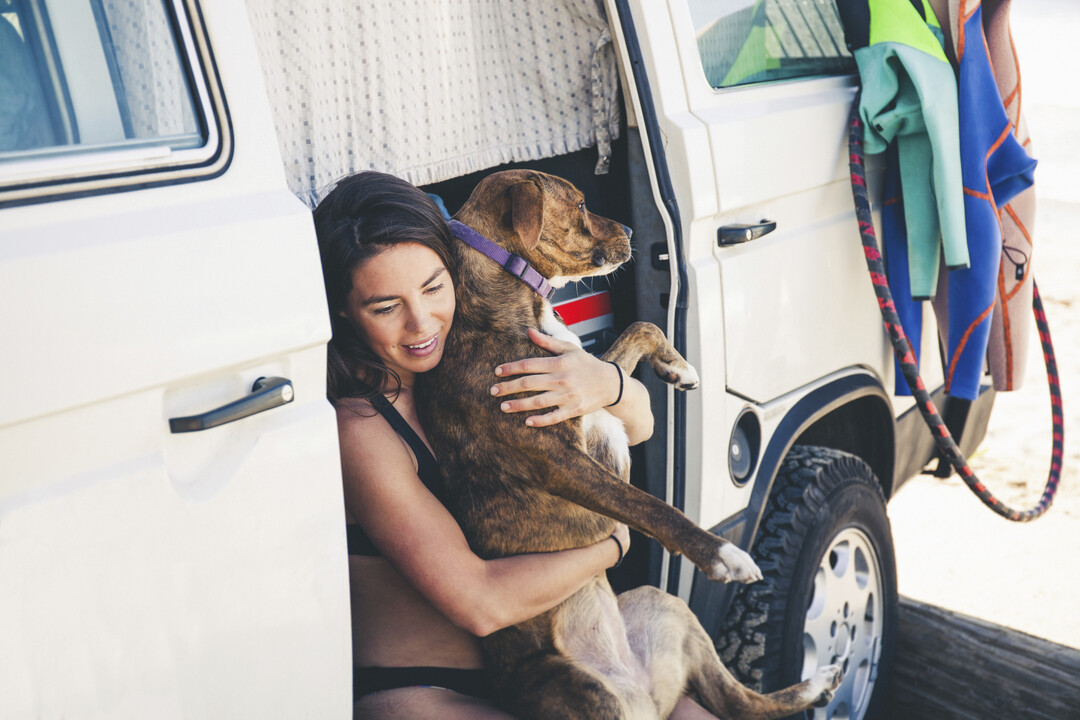
For many RV owners, the dog is not an extra passenger.
The dog is part of the camping crew.
That makes pet friendly RV travel one of the first things people check when planning a trip through British Columbia.
A campground may look perfect on a map, yet the stay can become frustrating if dogs have nowhere suitable to walk, local trails require leashes that you did not pack, or the park has rules you never checked before arrival.
Travelling with a dog in an RV has its own challenges too.
There is less indoor space. Wet paws seem to reach everything. Food needs somewhere secure. Barking carries surprisingly far through campground walls. Hot weather can turn an RV into an unsafe space in a short time.
A bit of planning solves many of these problems.
For travellers heading from Vancouver to the Sunshine Coast, Halfmoon Bay RV Resort gives dog owners a useful base. The resort is pet-friendly and has two pet parks where dogs can be off leash. It has more than 80 RV pads, walking trails and services suited to short or longer stays.
That means your dog can have space to move without every exercise break becoming another drive.
This guide covers what to pack, ferry travel, campground manners, RV space, local walks, designated off-leash areas, wildlife and longer stays with a dog.
“Pet-friendly” can mean very different things from one campground to another.
One campground may welcome several dogs.
Another may have limits based on:
Before booking, ask:
Do not wait until check-in to learn the rules.
At Halfmoon Bay RV Resort, dogs are welcome and the resort currently provides two pet parks where pets can be off leash.
That is a useful feature for both holiday visitors and long-term residents.
Your dog needs its own camping bag.
Keep it separate from general RV storage so you are not digging through chairs, hoses and levelling blocks every time the dog needs a drink.
Pack:
Bring more food than the exact number of days requires.
Changing food suddenly can upset a dog’s stomach, and an RV holiday is a particularly bad time to discover this fact.
If your dog takes medication, bring enough for the trip plus a small buffer.
Small RV spaces work better when everything has a home.
Set up a small dog station near the entrance.
It can hold:
A waterproof mat near the entrance is useful in coastal BC.
A rainy walk can turn one cheerful Labrador into a mobile distribution system for mud.
Having towels beside the door means you can deal with paws before the dog reaches the bed.
Dogs usually settle better when they have a familiar place inside the RV.
That may be:
Try to keep the location consistent.
Moving the dog’s bed every day can make a small RV feel unsettled for the animal.
A fixed space gives the dog somewhere to rest when people are cooking, packing or moving around.
This is particularly useful with larger dogs.
A 35-kilogram dog lying across a narrow RV hallway can turn breakfast preparation into an obstacle course.
RV storage needs to account for wildlife.
Dog food is still food.
Treat it like any other item that can attract animals.
Keep:
BC Parks asks visitors to dispose of waste properly and keep food-related rubbish from attracting wildlife.
Do not leave a bowl of dog food outside overnight.
Your dog may think you are leaving a snack for later.
Local wildlife may interpret the arrangement differently.
For Vancouver travellers heading to the Sunshine Coast, the usual route is from Horseshoe Bay to Langdale.
BC Ferries welcomes household pets, including dogs, and pets travel free. Current ferry rules provide designated pet areas on vessels, with access varying by ship. Pets are not permitted in indoor passenger lounges or food-service areas.
BC Ferries currently permits passengers on the Horseshoe Bay–Langdale route to remain in their vehicle for the sailing, regardless of deck placement.
That can be useful for a nervous dog that settles better in the familiar vehicle.
Before boarding:
BC Ferries currently limits designated pet areas to a maximum of two pets per handler and asks owners to keep dogs under control within marked pet spaces.
Check the current ferry information shortly before travel, since vessel facilities and rules can change.
A dog that has had a sensible walk before travel may settle better during the ferry and drive.
You do not need a three-hour hike before breakfast.
A normal walk, toilet break and calm boarding routine are enough for many dogs.
After arriving in Langdale, continue north and give the dog another break when safe and practical.
Keeping travel days predictable can help pets that find new vehicles, terminals and ferry noises stressful.
RV living means more doors, steps, cords and tight spaces than many dogs are used to.
Watch for:
If your dog is nervous around an open door, use a gate or another safe barrier.
An RV door can go from closed to open in seconds.
A squirrel can achieve a similar effect on a dog’s attention span.
RV temperatures can change quickly in warm weather.
Do not leave a dog inside a hot RV.
Air conditioning can help during warm conditions, yet any cooling system relies on equipment and electricity working as expected.
For longer stays, think about:
Cold weather needs planning too.
A small dog, senior dog or short-haired breed may need a warmer sleeping area during colder nights.
Watch the dog rather than assuming the thermostat tells the whole story.
Dogs tend to do better in small homes when they get regular outdoor time.
That becomes more noticeable in an RV.
A useful routine may include:
Morning: toilet break and walk
Midday: short walk or pet-park session
Late afternoon: longer trail or park visit
Evening: final toilet break
The exact routine depends on age, breed and health.
A young working dog may want far more activity than a senior pug.
Do not judge success by kilometres.
Judge it by whether the dog settles comfortably inside the RV afterwards.
One of the strongest pet features at Halfmoon Bay RV Resort is right at the campground.
The resort has two pet parks where dogs can be off leash.
That gives residents a practical place for:
It is particularly handy for long stays.
You do not need to drive into Sechelt every time your dog needs to run.
Use the area responsibly:
An off-leash area works well only when owners are paying attention.
Your phone has survived several minutes without you before.
It can do it again.
This is a big one on the Sunshine Coast.
Do not assume a forest trail is an off-leash trail just since it looks quiet.
The Sunshine Coast Regional District says dogs are permitted in its parks and trails, but they must be leashed except in designated off-leash parks.
The District of Sechelt has similar rules for its pathways, trails and walkways: pets should stay on leashes.
That means pet owners staying in Halfmoon Bay should think in two groups:
Off-leash exercise: use a clearly designated dog park.
Forest and coastal walks: keep the dog leashed where local rules require it.
This protects wildlife, other visitors and your own dog.
You do not need to drive far for a useful dog walk.
The George Cormack Park and Redrooffs Circle Trail is in Halfmoon Bay. The SCRD trail map describes the Redrooffs Circle Trail as about 250 metres long with access to a pebble beach. Dogs are welcome but must remain leashed. The same map warns that bears and other wildlife can visit the area.
That makes it suitable for:
Keep dogs away from wildlife and respect the area’s salmon habitat.
Short walks count.
Not every dog outing needs a mountain summit and a commemorative T-shirt.
For a longer outing, Smuggler Cove Marine Park sits between Secret Cove and Halfmoon Bay.
BC Parks says land access includes a roughly 4 km hike from the parking area. Dogs and other pets must remain leashed, and pets are not allowed in beach areas or park buildings.
The trail gives dog owners a forest outing without needing to move the RV itself.
Bring:
Check current park conditions before leaving.
If your dog wants more off-leash time beyond the resort, Sechelt has several designated areas.
The District of Sechelt currently lists off-leash facilities at places including:
Jane Bowers Dog Park is listed as an enclosed off-leash dog park.
These options can be handy when you are already going into Sechelt for groceries, supplies or lunch.
Check posted signs when you arrive.
Local rules can change, and some parks contain several zones with different uses.
The SCRD manages a designated off-leash dog park at the north end of Shirley Macey Park, at 930 Chamberlin Road in West Howe Sound.
Current rules ask owners to supervise dogs, clean up waste, maintain voice control, respect other dogs and leash pets when leaving the off-leash area. Dogs must be older than four months to use the dog park.
It is farther south than Halfmoon Bay, so it makes more sense as part of a day towards Gibsons rather than a quick morning dog break.
For everyday off-leash exercise, the resort’s own pet parks are far more convenient.
A beach can look empty and still have leash rules.
The District of Sechelt asks visitors to keep pets leashed at its beach accesses and clean up after them.
BC Parks may have different restrictions at individual parks.
Some beach areas do not permit pets at all.
Read the signs before letting a dog onto the shore.
This is good etiquette for another reason too.
Not everybody wants an enthusiastic wet dog joining their picnic.
Your Labrador may see a new best friend.
The person holding a sandwich may have a different interpretation.
Dogs and wildlife can be a risky mix.
The Sunshine Coast is home to wildlife, including bears.
The District of Sechelt recommends keeping dogs leashed in bear country, staying on marked trails and giving wildlife space.
BC Parks gives similar guidance on keeping pets controlled to protect dogs, wildlife and other visitors.
On walks:
A dog running into the bushes may return with considerably more excitement than you planned.
Campgrounds put people fairly close together.
One barking dog can be heard across several sites.
Triggers may include:
Learn what sets your dog off.
Useful steps can include:
Do not let repeated barking become everybody else’s camping soundtrack.
People can love dogs and still want to hear the forest.
Keep dogs out of neighbouring RV pads.
Campground boundaries may not have fences, but they are still someone else’s space.
Use a standard lead or secure setup that keeps your dog within your own site.
Do not allow dogs to:
Ask before letting dogs greet.
Some friendly-looking dogs need space.
Some people do too.
Carry more waste bags than you think you need.
Keep some:
Both the SCRD and BC Parks require pet owners to clean up after their dogs in the areas they manage.
This is one of the simplest parts of being a good campground neighbour.
There really is not much room for debate.
The Sunshine Coast gets rain.
Dogs continue needing walks.
The result is predictable.
For pet friendly RV travel in coastal BC, carry:
Keep wet items from piling up inside.
Halfmoon Bay RV Resort has a 24-hour laundromat, which can be useful during longer stays with muddy dogs and wet towels.
It is one of those campground features that becomes more attractive after your third rainy walk.
Dogs can be hard on an RV.
A few small changes can protect the space:
If you own the RV, this protects your home.
If you rent the RV, it may protect your damage deposit.
Check rental-company pet rules before taking an animal into a rented rig.
Before leaving home, save:
For longer stays, bring a copy of useful medical records.
This is particularly helpful for dogs with:
Do this before the trip.
Searching for a veterinary clinic during a stressful situation is no fun for anyone.
A weekend trip and a six-month RV stay are different.
For long-term residents, think about:
Dogs tend to settle well when daily life becomes predictable.
A regular morning walk, meal time and evening outing can make a small RV feel like home.
When booking, ask about the site itself.
A dog owner may prefer:
Halfmoon Bay RV Resort has more than 80 pads with different levels of shade, sun and privacy, according to its FAQ.
Tell the resort that you are travelling with a dog when asking about availability.
The most suitable RV pad for a couple without pets may not be the same one you prefer with two energetic dogs.
For travellers looking for a pet friendly RV destination on the Sunshine Coast, Halfmoon Bay RV Resort has several practical benefits.
The resort currently offers:
Its FAQ states that pets are considered part of the family and are welcome at the resort.
That combination works well for a short holiday.
It becomes even more useful for longer stays.
You can exercise the dog onsite, take leashed walks in the area, drive into Sechelt for designated off-leash parks and return to the same serviced RV base.
Travel from Horseshoe Bay to Langdale.
Give the dog a toilet break before boarding and use the current BC Ferries pet arrangements that suit your dog.
Continue to Halfmoon Bay.
After setting up the RV:
There is no need to fill arrival day with activities.
The dog has had a big day too.
Take a leashed local walk.
The George Cormack and Redrooffs Circle Trail offers a short Halfmoon Bay option with pebble-beach access, with dogs required to stay leashed.
Return to the RV for rest.
Later, use the resort’s off-leash area for another exercise break.
This gives the dog forest time, coastal air and a chance to run without turning the day into a marathon.
Head into Sechelt.
Combine normal errands or lunch with a visit to one of the District’s designated dog areas, such as Jane Bowers Dog Park.
Then return to Halfmoon Bay for a quiet evening at the RV.
It is a simple trip.
That is often exactly what works best with a dog.
Yes. Halfmoon Bay RV Resort is pet-friendly and currently has two pet parks where dogs can be off leash.
Do not assume local trails are off leash.
The SCRD requires dogs to remain leashed in regional parks and trails except in designated off-leash parks.
Halfmoon Bay RV Resort has two designated off-leash pet parks for residents.
The most convenient option for resort guests is the two off-leash pet parks at Halfmoon Bay RV Resort.
Sechelt lists several designated off-leash areas, including Brookman Park, Creekside Park, Jane Bowers Dog Park and Kinnikinnick Park.
Yes. Household pets travel free on BC Ferries. Depending on the vessel, designated pet areas may be available. Pets are not permitted in indoor passenger lounges or food-service areas.
Current BC Ferries travel guidance says passengers on the Horseshoe Bay–Langdale route can remain in their vehicle during the sailing regardless of deck placement.
Check current guidance before departure.
Dogs can visit Smuggler Cove Marine Park but must remain leashed. BC Parks states that pets are not permitted in beach areas or park buildings.
The District of Sechelt asks visitors to keep pets leashed at its beach accesses and clean up after them.
Individual parks may have extra restrictions, so read posted signs.
Not where leash rules apply.
The SCRD and District of Sechelt require leashes on their general trails outside posted off-leash areas.
Leashes help reduce wildlife conflicts too.
Bring food, bowls, water, two leads, harness, waste bags, towels, bedding, medication, ID, vet details and a few familiar toys.
For coastal BC, extra towels are rarely wasted.
It can work very well when the dog gets enough exercise, has a fixed sleeping space and follows a predictable routine.
A campground with nearby walking routes and off-leash facilities makes daily life much more practical.
Good pet friendly RV travel is not complicated.
It does need planning.
Choose a campground that genuinely welcomes dogs.
Pack the right gear.
Know the leash rules.
Give your dog enough exercise.
Keep food and rubbish secure.
Respect neighbouring sites.
And do not assume every quiet trail or beach is an off-leash area.
On the Sunshine Coast, the rules are quite clear: many regional and municipal trails welcome dogs, but leashes are required outside designated off-leash areas.
That makes Halfmoon Bay RV Resort particularly practical for dog owners.
You have two off-leash pet parks right at the resort, local leashed walks nearby and several designated dog parks available when visiting Sechelt.
The RV gives you your home on wheels.
Halfmoon Bay gives your dog somewhere to stretch theirs.
 See map of resort